The pilot for Babylon 5 first aired in 1993 and began a five-year journey that would result in one of the most respected and admired science fiction tv series ever produced, the winner of multiple Hugo and Emmy awards. Created by writer and producer J. Michael Straczynski, Babylon 5 was innovative in its use of years-long story arcs, rather than the more traditional stand-alone episodes and limited serials that one found in shows like Star Trek. It also was the first to feature exclusively CGI-generated visual effects.
Straczynski wrote the entirety of B5 before a single episode was broadcast, with a thousand years’ worth of history sketched before and after the period covered in the show. The story is grounded in a quarrel between the forces of order and chaos, represented by ancient galactic races known as the Vorlons and the Shadows, and the similarity between this and the creation myths of the Mesopotamian civilization that inspired the series’ name was intentional. Throughout Babylon 5, major elements are drawn from a number of human civilizations, and this deserves a lot of the credit for the show’s realism and depth.
Babylon 5 is a five mile long space station that is home to a quarter of a million humans and aliens of various spacefaring races. It is essentially an enormous “O’Neill cylinder,” in which the two halves rotate in opposite directions to generate gravity, and orbits a mysterious planet, the revelations about which will have plot-changing consequences. The “Babylon Project” was conceived in the wake of a devastating war between humans (who are depicted as newcomers on the galactic scene, in a manner reminiscent of David Brin’s “Uplift” Series) and the Minbari, one of the oldest and most advanced races in the galaxy; a conflict that was the result of a simple misunderstanding. In order to prevent such a thing from happening again, the Babylon Project imagined a place that would serve as a galactic United Nations and trading center, where intragalactic conflicts could be resolved diplomatically and peaceful and productive relations between planets developed through negotiation and trade. But it is only once Babylon 5 is constructed, after a series of mishaps and mysterious circumstances that lead to the loss or destruction of Babylon Stations 1 through 4 (a narrative arc within the series that also will have long-reaching ramifications), that this dream is finally realized.
Babylon 5 involves political intrigue and high drama, all building up to a war between the Vorlons, the Shadows, and their client races. A space opera presented almost in the manner of daytime soaps, every episode contains important details, all of which contribute to the series’ five-year narrative. Indeed, the first season, aptly named “Signs and Portents,” foreshadows every significant plot element that will unfold over the course of the show’s five-year run.
One of the series’ greatest strengths is the way in which it combines a grand epic with a commitment to realism in the depiction of its universe, people, and central action. The world of B5 reflects not some already established, idealized order, in which trouble occasionally erupts, as we find in Star Trek, but one in which any ideal society is far off, if even conceivable; where every race and every individual is flawed, sometimes catastrophically so; and in which there are never-ending struggles, negotiations, and conflicts, with shifting alliances between the races and between factions within the individual races. Here are just a handful of some of the key personnel and institutions that we find in Babylon 5.
Jeffrey Sinclair
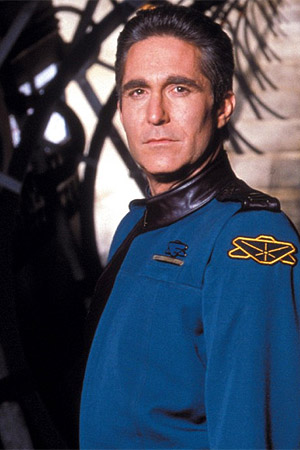
Babylon 5’s first commander and a former Jesuit, Sinclair is a veteran of the Earth-Minbari war and a hero of the “Battle of the Line,” in which Minbar, on the verge of total victory over Earth, suddenly and inexplicably surrendered. Sinclair was the last survivor of his squadron and blacked out during the last 24 hours of that final battle. Much of the first season of B5 is devoted to exploring what happened to Sinclair during that lost day, and what we discover is crucial to what will become an intricate and mind-bending story of the relationship between humans and the Minbari. At the end of the first season, Sinclair is removed from his post and reassigned as Earth’s Ambassador to Minbar, a development that will set the stage for an even larger role for Sinclair, as well as for John Sheridan’s entry into the B5 universe. Sheridan will command the station for three seasons and will play as large a role in the fate of the galaxy as his predecessor, if not even larger.
John Sheridan

B5’s second commander, Sheridan is also a hero of the Earth-Minbari war. Called “Starkiller” by the Minbari, Sheridan is the only Earthforce officer who succeeded in destroying a Minbari capital ship during the war. His tenure at Babylon 5 begins rockily, almost setting off another Earth-Minbari conflict, but he soon emerges into the role that we later discover he was destined for. By the show’s end, Sheridan not only will have led the station, but will have headed a coalition of the galaxy’s races, in its greatest and most consequential war. Equally skilled in warfare and diplomacy, Sheridan is the series’ strongest, least ambiguous, and most consistent character, providing a kind of ballast, beneath the ever shifting, ever developing plotlines that develop over the course of B5’s five-year run.
The Psi Corps


In the B5 universe, every race, with the exception of the Narn (and interestingly enough, the Shadows) has telepaths, individuals with the ability to read and manipulate minds and at greater strengths even deploy telekinetic abilities. On Earth, concerns regarding the privacy of non-telepathic “normals,” as well as considerations of security more generally, lead to the creation of a “Psi-Corps,” whose ostensible job is to train telepaths in the use of their talents, teach them how to block out the thoughts of others, and serve the state, in a number of capacities. Business negotiations, for instance, require the inclusion of a registered telepath, whose presence is to insure honest dealings among the parties.
As Earth’s politics become increasingly troubled over the show’s five-years, the Psi Corps is gradually revealed as a secretive “Black Ops” style agency that is involved in espionage, sabotage, and selective breeding and which may even be functioning as a puppet-master behind the scenes on Earth. It is worth noting that the Psi Corps character whom we see the most of in the series is the slimy, despicable Alfred Bester, played to malicious perfection by Star Trek veteran, Walter Koenig.
Delenn

The Minbari Ambassador to Babylon 5 and clandestine member of the Minbari’s ruling body, The Grey Council, Delenn has an intimate connection to Jeffrey Sinclair (related to his lost 24 hours, during the Battle of the Line) as well as to the Vorlon Ambassador, Kosh. Delenn’s story is one that follows an ancient Minbari prophecy and involves her undergoing a shocking transformation that contributes to the already divisive and unstable internal politics of Minbar. Her eventual relationship with John Sheridan will provide one of the most powerful and enduring romantic storylines within the series, and the role Delenn ultimately plays in the larger tale that unfolds over the show’s five year run is unmatched by anyone, other than perhaps Sinclair or Sheridan.
Londo Molari
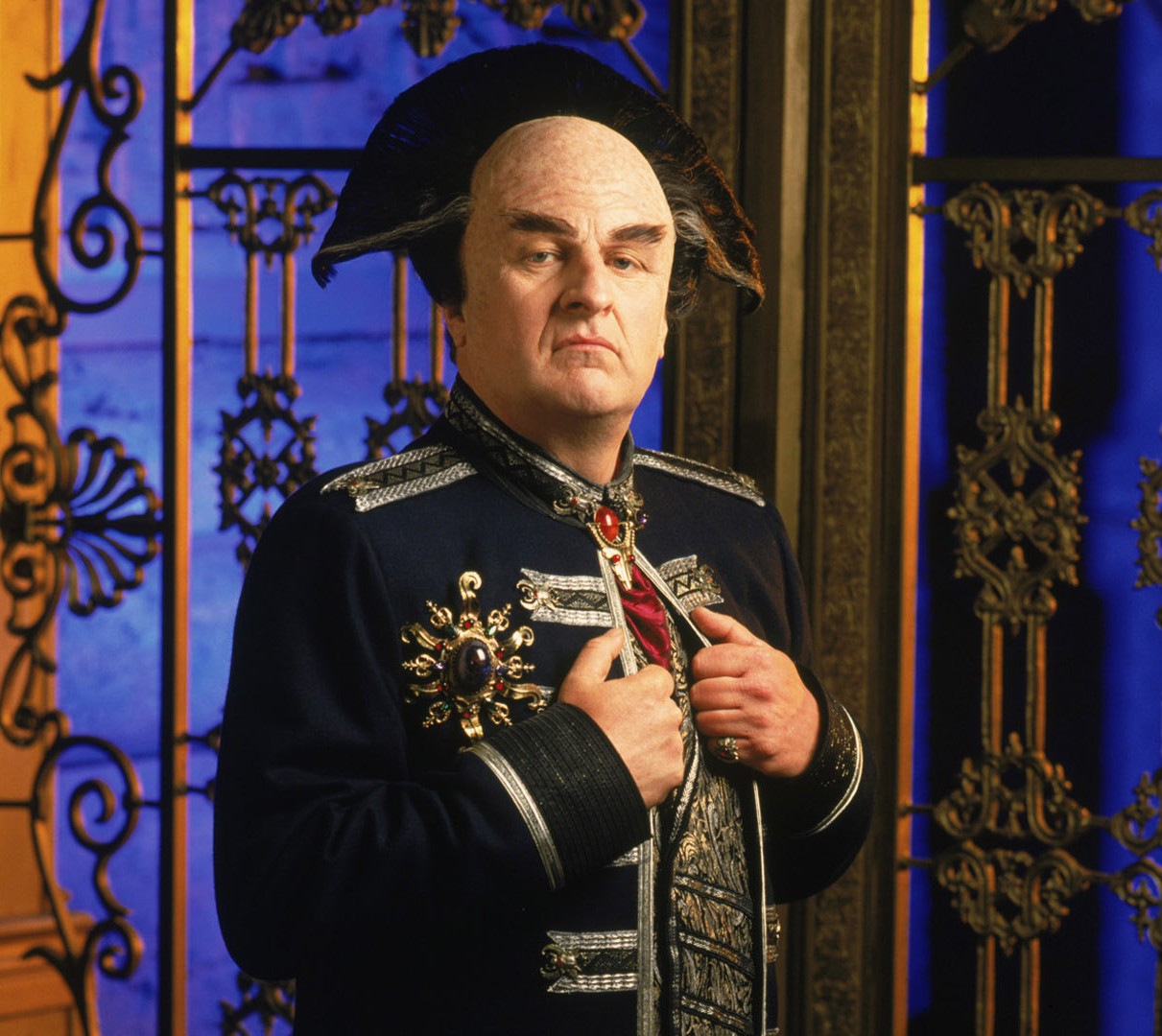
When Babylon 5 opens, the Centauri are a people whose best days are long past and whose Ambassador, Londo Molari, is mostly a comic figure. Londo’s story will be one of the Centauri’s rebirth as a major power and their re-subjugation of the Narn, over whom they had exercised a cruel and exploitive rule for over a century. Londo’s is also the tragic tale of a fall, not just of a man, but of an entire civilization; the kind that only happens when one gets exactly what one asks for and in which the line between triumphant hero and disgraceful monster is so fine as to be almost invisible. Even more remarkable is the relationship that develops between Londo and G’Kar, the Narn ambassador, one that spans the entire spectrum of human interactions: from the direst of enemies to the closest of friends to one another’s Nemesis.
G’Kar
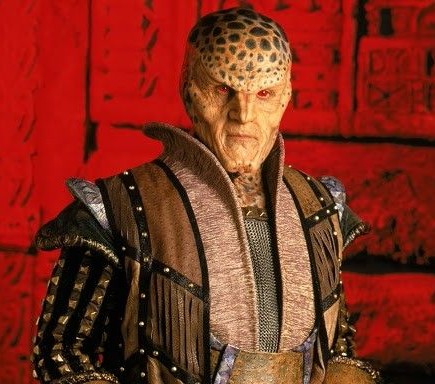
G’Kar is the Narn ambassador to Babylon 5, a member of the Narn governing body, the Kha’ri, and was a freedom fighter, during the Centauri occupation of Narn.
G’Kar’s evolution is perhaps the most straightforward of any character in the series. Beginning as an angry, vengeful, somewhat petty diplomat, whose main interest is to punish the Centauri for their invasion and occupation of his homeworld, he develops slowly and seamlessly into a skilled and generous negotiator, a dogged advocate of galactic peace a statesman, a writer of national constitutions, and finally, a religious figure.
___
Babylon 5 is connected in a number of different ways to Star Trek, the most iconic of science fiction TV shows. The creative consultant to Straczynski for the duration of the series was Harlan Ellison, who won eight Hugo and four Nebula awards and wrote some of the most highly regarded episodes of the original Outer Limits. He also wrote “The City on the Edge of Forever” for the original Star Trek and famously feuded with Star Trek creator Gene Rodenberry, who edited the teleplay beyond almost any recognition, without the writer’s approval. Ellison found a welcome opportunity in Babylon 5 to present a science fiction show from his own perspective, without the sort of meddling that caused his decades-long rift with Rodenberry. It is also worth noting that Paramount began broadcasting a new Star Trek series, Deep Space Nine, less than two months before the B5 pilot aired. The obvious similarities between the shows and the fact that Babylon 5 was first pitched to Paramount in 1989 led Straczynski to consider suing, something he eventually declined to do. A number of Star Trek franchise cast members also appeared in Babylon 5, including the aforementioned Walter Koenig, Majel Barrett (Rodenberry’s widow, who also played in Deep Space Nine and whose appearance in Babylon 5 was an olive branch of sorts), and Andreas Katsulas.
Straczynski’s explicit vision was that Babylon 5 should do for science fiction what Hill Street Blues had done for police dramas. Hill Street Blues, which ran from 1981 to 1987, redefined police shows and effected a move in television toward more realistic depictions of law enforcement, rather than the more sanitary and tame versions that had been the norm in the 1970’s. Straczynski wanted to make the same kind of “grown-up” show for science fiction audiences, with realistic characters, in a setting that facilitated character growth, adaptation, and difficult choices. This matched up fairly well with Harlan Ellison’s own perspective on American science fiction, which he felt was mostly puerile.
In terms of Babylon 5’s production, the original five-year sequence was marred by the fact that the American Prime Time Entertainment Network, on which the first four seasons aired, folded in 1997 after the fourth season. Season Five was eventually picked up by the TNT Network, but very late in the show’s production timeline. Nonetheless, B5 had resolved the major plot developments by the end of the fourth season, with Season Five devoted to developing some of the general history and major characters’ stories in the aftermath of the action just concluded. Besides the original five years of the series, Straczynski was able to film four made-for-TV movies, as well as re-releasing the series Pilot. He also produced thirteen episodes of a successor series — also planned on a five year scale — called Crusade. That series never took off and was canceled after the first season.