
The conventional wisdom is that the first seasons of great TV shows tend to be weak; that the writers and cast need time to break things in; get things going; develop relationships, plotlines, and character arcs that are enduring and resonate with audiences. And while there are clear cases pointing in the opposite direction; shows that were at their best at the beginning and then lost focus or crucial cast members, suffered diminished budgets, etc. — the original Star Trek, Miami Vice, and Sliders come to mind — they seem to be few in number. Whether it’s Star Trek: The Next Generation (and every one of its successors through Enterprise), Babylon 5, Buffy the Vampire Slayer, or the more recent Agents of Shield, the consensus is that these shows really only became good several seasons in.
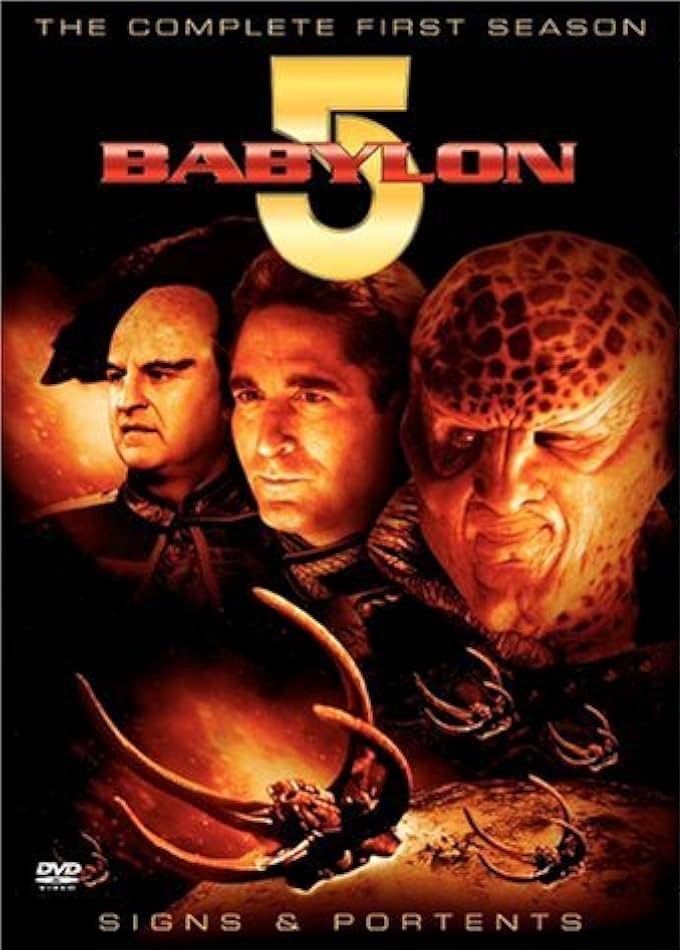
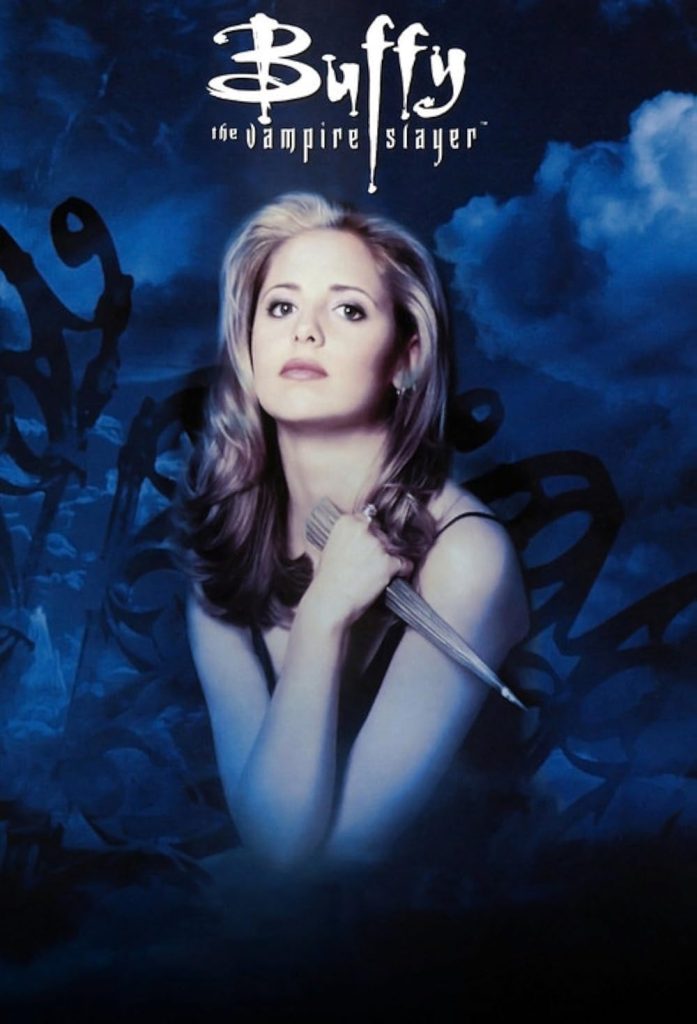
The first seasons of Babylon 5 and Buffy the Vampire Slayer
And yet, the older I get, the more I love the first seasons of shows. I would never pretend that the first season of The Next Generation is better in some objective sense than, say, seasons three or four, or that season one of Babylon 5 is superior to seasons two or three, but I do like them better in many ways and certainly watch them more often. This struck me during a recent re-watch of Agents of Shield, and I thought I’d say a few things about why.
I am 57 years old, so most of my experience with television is prior to the development of the currently dominant “cinematic” and serialized version of the medium. Now this isn’t entirely true, as the first cinematic TV series was Miami Vice, which started in 1984, and Babylon 5 was fully serialized for the entirety of its five-year run and first aired in 1988, but for the most part, television shows were presented theatrically (i.e. staged and shot in the manner of theater) and episodically and were comprised of twenty to thirty episode seasons, spanning from the Fall through the Spring. Episodes aired weekly (sometimes in front of a live audience), so “bingeing” a show was impossible. Once a week, for seven to nine months, you’d spend a half-hour or hour with Archie and Edith, the doctors and nurses of the 4077, Kirk, Spock, and McCoy, or Magnum, Higgins, Rick, and T.C. , then take a little time off for the summer and start up again the next season, for years on end. MASH ran for eleven seasons. All in the Family and Magnum PI ran for eight. The original Star Trek was cancelled in 1969 after just three seasons, but received a second life in syndication and ran perpetually on stations across the country for more than a decade after, becoming a genre-defining, pop-cultural institution.
It’s a model of the medium that I prefer to today’s setup, in which a show consists of just a handful of seasons that are barely ten episodes long, often separated by several years (Stranger Things, season 5, comes three years after season 4, for example), wholly serialized, and usually released all at once so as to be bingeable in a day or two. Indeed, it’s almost absurd to speak of “seasons” with regard to this kind of television, given how sparse and spread apart it is, and the experience of watching ten installments of a show over two days bears no resemblance to that of watching twenty to thirty episodes on a weekly basis from September to June. In truth, today’s blockbuster shows — Stranger Things, The Man in the High Castle, Severance, Fallout, etc… — are more reminiscent of the high profile mini-series that would appear from time to time back in the day then they are like the regular TV shows we used to watch. If you’re looking for an analogue to today’s hit shows in classic TV, think Roots (1977), the original Shogun (1980), or Wild Palms (1993), rather than The Jeffersons, Hill Street Blues, or Miami Vice.
So, all of the shows I will be talking about here belong to the older model of television production and broadcasting in one way or another. Lacking the cinematic bells and whistles of the movies, packing so many episodes into a season that it was impossible to maintain a persistently high pace, and being episodic, which meant that there wasn’t a perpetual stream of cliffhangers, you had to like the characters and their worlds enough to want to spend time with them week after week for the better part of a year and then return to them for seven, eight, or ten years after. Like real people’s lives, not every episode was packed with action or excitement — there were occasions where nothing much would happen aside from dialogue, or characters might spend the whole runtime in one location — and in the case of shows like The Honeymooners, All in the Family, or Cheers, the entire series might take place almost wholly within a single room. In short, the TV shows “of old” stood or fell on the strength of their ensembles.
A show like Agents of Shield stands in between the old and the new. It certainly brought cinematic production values to the table, being part of the (once-great) Marvel Cinematic Universe, but it also retained the old TV paradigm’s densely-packed seasons — with 22 episodes per season for the first five years — and relied heavily on its core ensemble to deliver its brand of superhero television. So, while it is a relatively new series compared to the others I’m talking about, it was in many ways an old one in terms of its design philosophy and execution, and especially in its first season, before serialization would take hold and define the show’s middle and later parts.
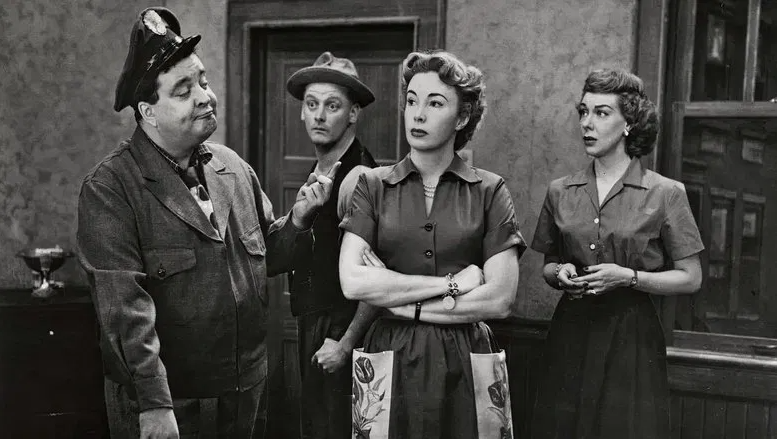
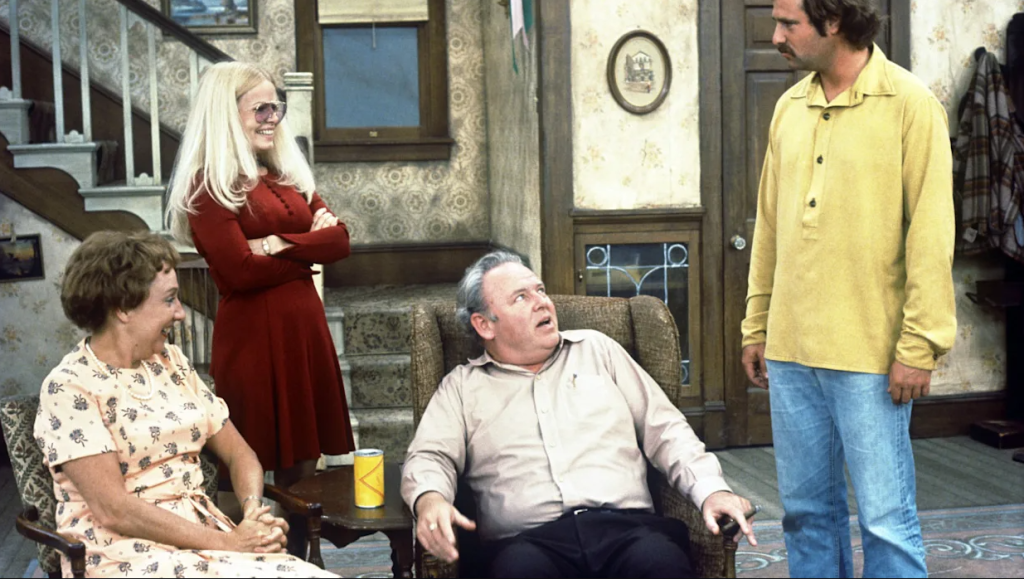
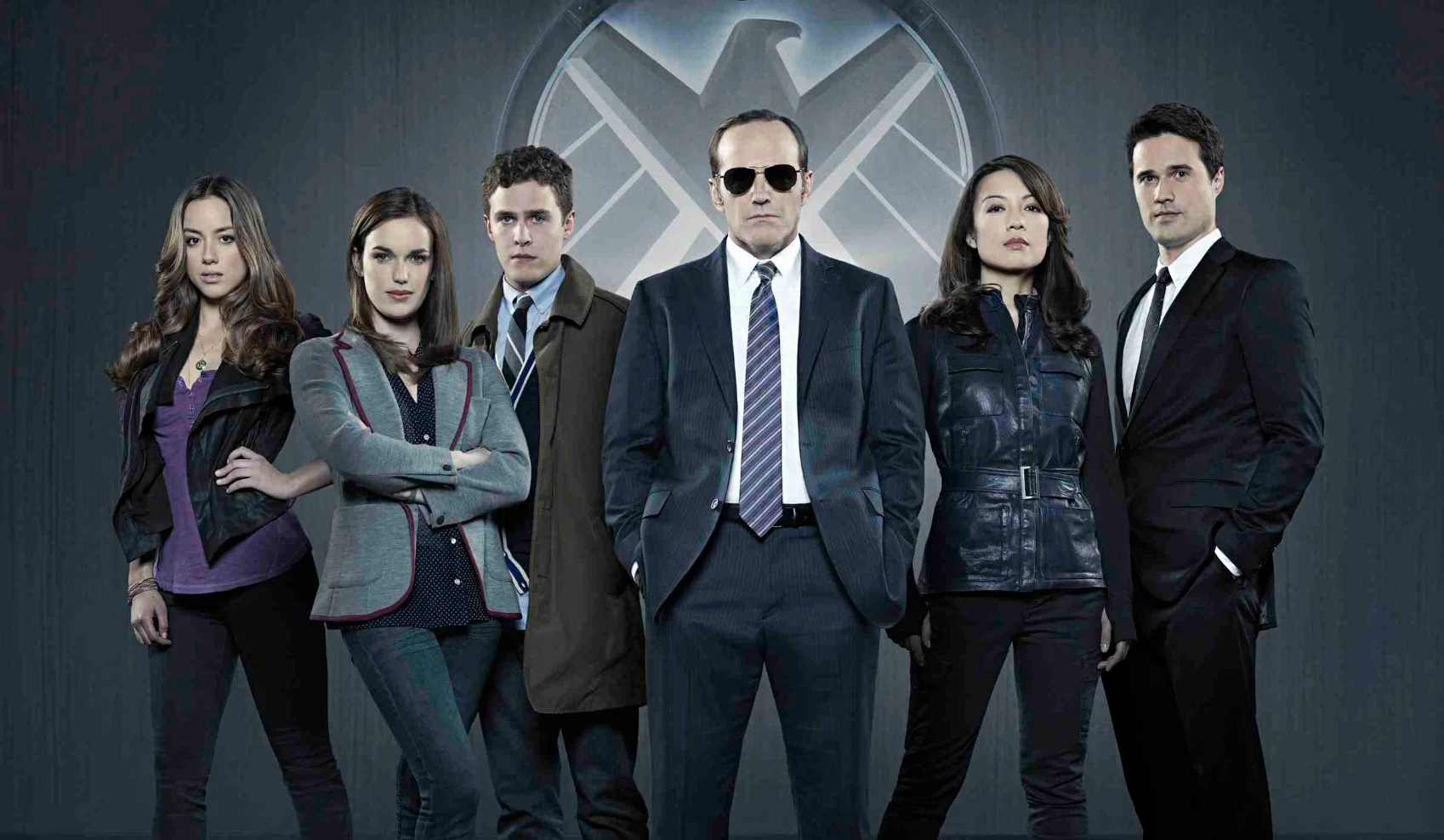
The Honeymooners (Top Left) was set almost entirely in Ralph and Alice’s kitchen; All in the Family (Top Right) was mostly staged in the Bunker’s living room; The core ensemble of Agents of Shield (Bottom)
Buffy is an interesting case, because what stands out about its first and second seasons is that they are the only ones that represent what was compelling about the show in the first place, which was that it was supposed to be a negative image of the wildly popular Beverly Hills 90210, a saccharine early-90s distillation of the previous era’s John Hughes films. The idea of personifying the cliquish, cruelty-laced high school experience in the form of persistent supernatural — and especially, vampiric — threats was inspired, but once the characters were out of high school (which they are from Seasons 3 onward), the raison d’etre for the show disappeared, and it became a hybrid twenty-something soap opera/monster program that lacked anything interesting enough to keep me watching.
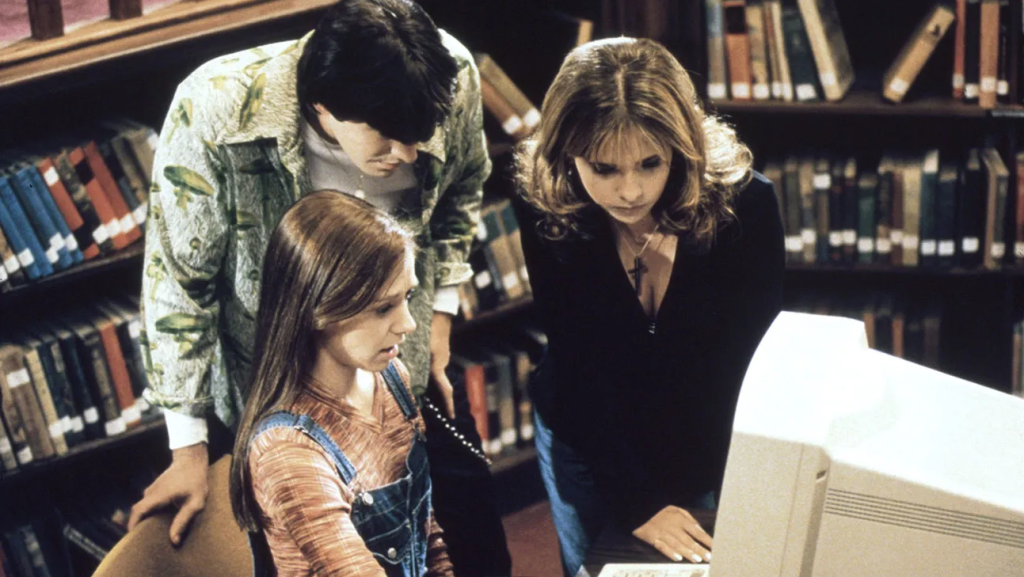
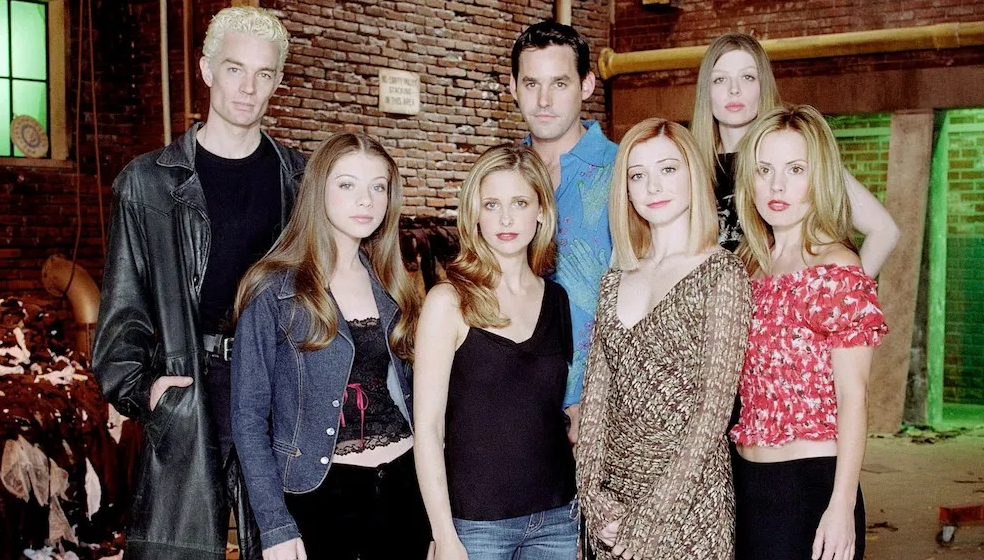
Buffy, Xander and Willow in the Sunnydale High School library in Buffy the Vampire Slayer’s first season (Left);The no-longer-in-high-school cast of Buffy in season 7 (Right)
If a first season is especially well-designed, it may offer a blueprint or roadmap for a series’ entire run, which makes it especially rewarding to revisit once one has watched the whole thing. Babylon 5 is probably the best example of this, with a first season titled “Signs and Portents,” in which every element of the five year show — plot; characterization; theme; setting; and larger mythology — is presaged in creative and subtle ways. In season one’s “Babylon Squared,” Babylon 4 — the space station whose mysterious disappearance led to the construction of Babylon 5 — suddenly reappears, leading Babylon 5’s Commander, Jeffrey Sinclair, to investigate. By the episode’s end, Babylon 4 disappears again, so the mystery endures. It’s not until two seasons later, in a two-part episode, “War Without End,” that we not only find out where Babylon 4 went and what happened to it, but discover that unbeknownst to him, Sinclair was at the center of it all, and as it turns out, at the heart of the show’s broader mythology as well. It is storytelling of the highest order, and once one has finished the series, it’s gratifying to revisit “Babylon Squared,” not just because one may discover details and clues missed the first time around, but because there is a unique pleasure in being an omniscient spectator; in knowing what is going to happen, when the characters playing out the drama do not. And Babylon 5 doesn’t just do this sort of thing once. The first season is littered with elements like this, the full significance of which is only revealed in subsequent seasons or in several made-for-TV films.
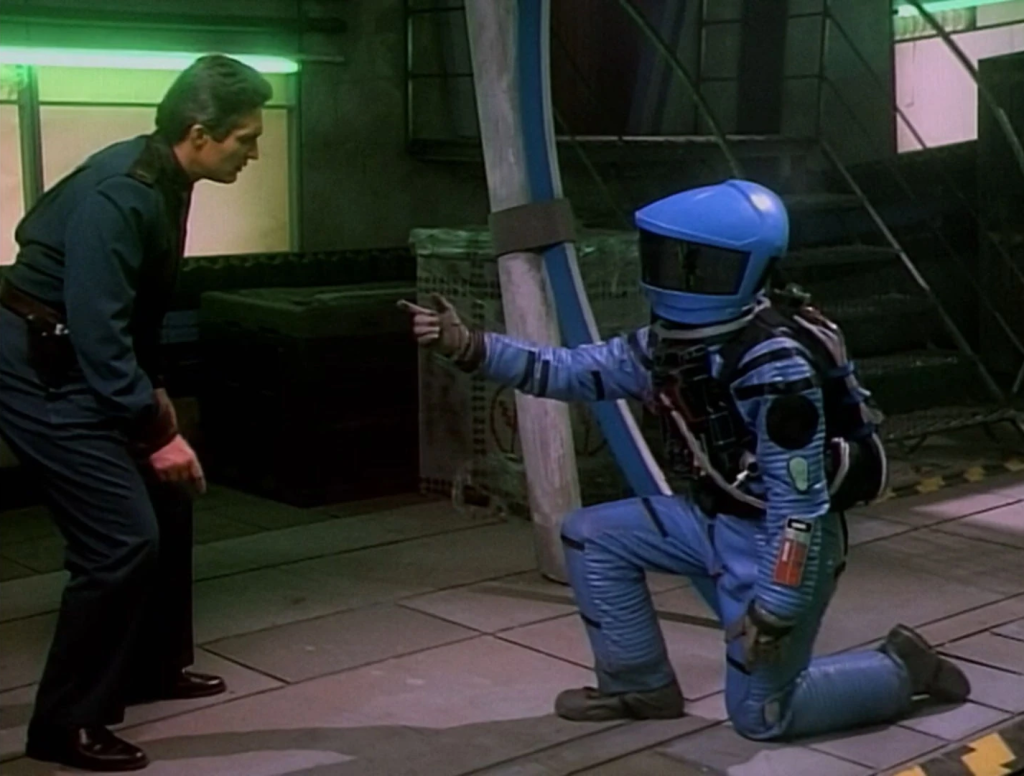
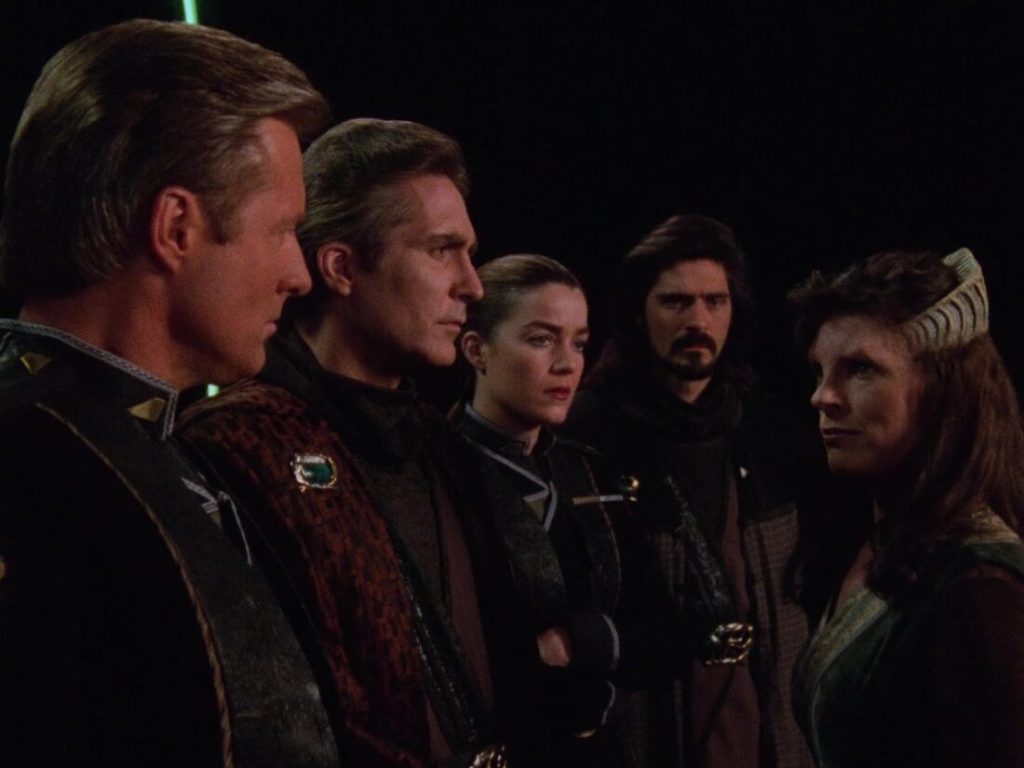
Season One’s “Babylon Squared” (Left); Season Three’s “War Without End” (Right)
What I find most appealing about first seasons of great TV shows, however, is that they provide an opportunity to live with the characters in their respective worlds for a while, before the major plot elements and character arcs develop and it all gets busy. The Agents of Shield gang together on their “bus” — a heavily modified Boeing C-17 — going from one self-contained adventure to another, before the big Hydra reveal towards the end of the first season, which dovetailed with the release of Captain America and the Winter Soldier in April, 2014, and put the show on a serialized footing thereafter. Setting out with Captain Picard and his newly assembled crew in their freshly minted Galaxy Class starship, traveling from planet to planet and falling into one predicament or another, before all of the entanglements with the Romulans, Klingons and Borg began. Or tagging along with Muldur and Scully in the X-Files’ first season, chasing the paranormal whatsit of the week, before the great conspiratorial story arcs really set in, with only “signs and portents” of what was to come, which makes it satisfying much in the same way that the first season of Babylon 5 is.
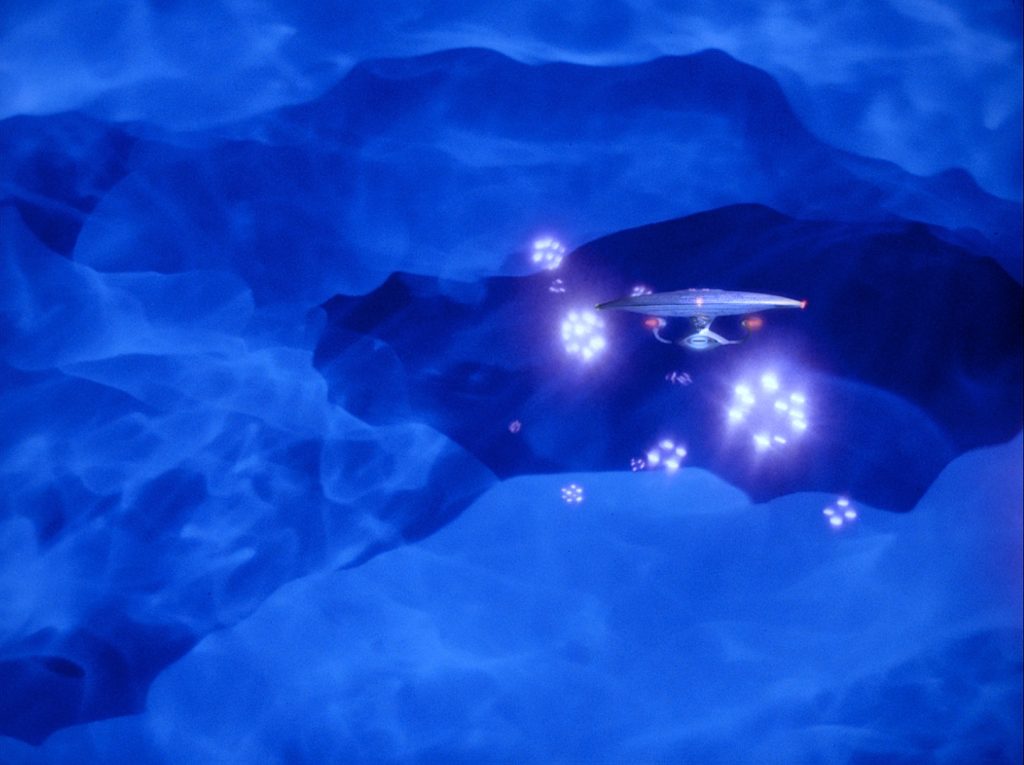
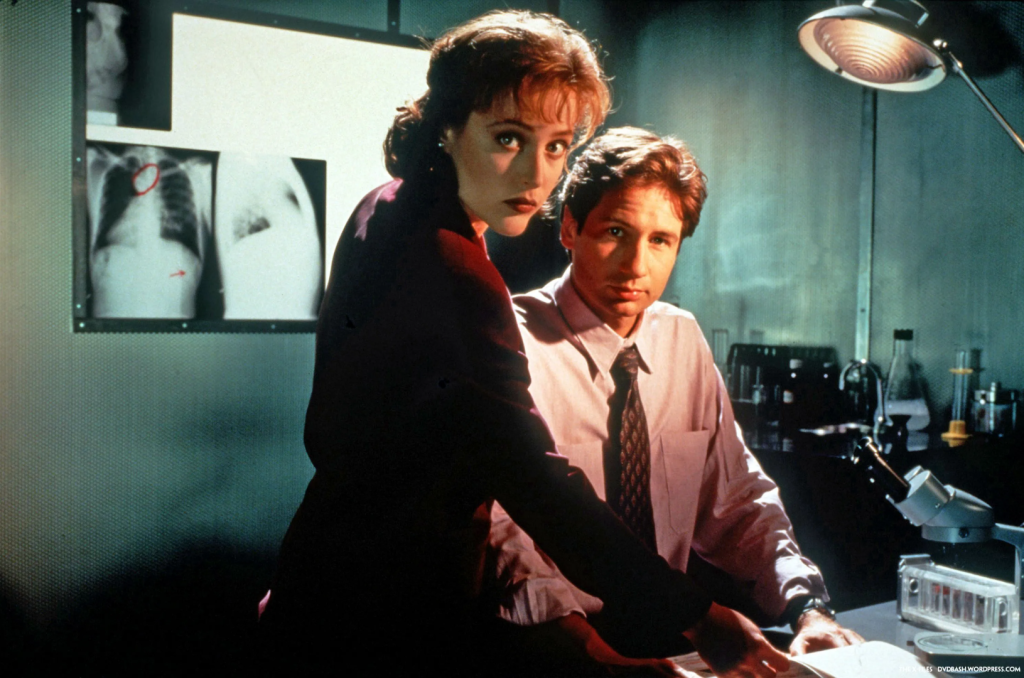
Screenshot from Star Trek TNG’s, “Where No One Has Gone Before,” not just one of the best episodes of the first season but of the entire series (Left); Muldur and Scully in the first season of the X-Files (Right)
Once I’ve completed several full watchthroughs of a series and know all of the plot developments and twists and character arcs and grand finales down to the finest detail, and I feel a hankering for the show again, it’s really just the first season that I want to watch. I already know what happened — who lived and who died; who triumphed and who was defeated; what became of this empire or that nation or whichever organization; and what the meaning of it was, what it was all for — and now, I just want to spend some time with my old friends, back in our old neighborhood. This is the special magic that first seasons hold and why they are so dear to me.