
I was born in 1968, so my childhood was spent in the 1970s. My parents had recently moved from Queens to Long Island, where I would be raised in a leafy suburb, and as they’d only emigrated to the United States ten years earlier, they were almost as new to the place as I was.
My memories of the decade are fond despite its reputation for being one of malaise and decline. A string of political assassinations, the Vietnam War, and the riots and civil unrest of the late 1960s had left the public weary and cynical, and the Kent State Massacre and Watergate only made things worse. Add to this the unraveling of the post WW2 economic boom, an OPEC oil embargo that trapped Americans in sprawling gasoline lines, and crippling stagflation, and it’s unsurprising that by the time of the Carter administration, people were talking about a “misery index.”
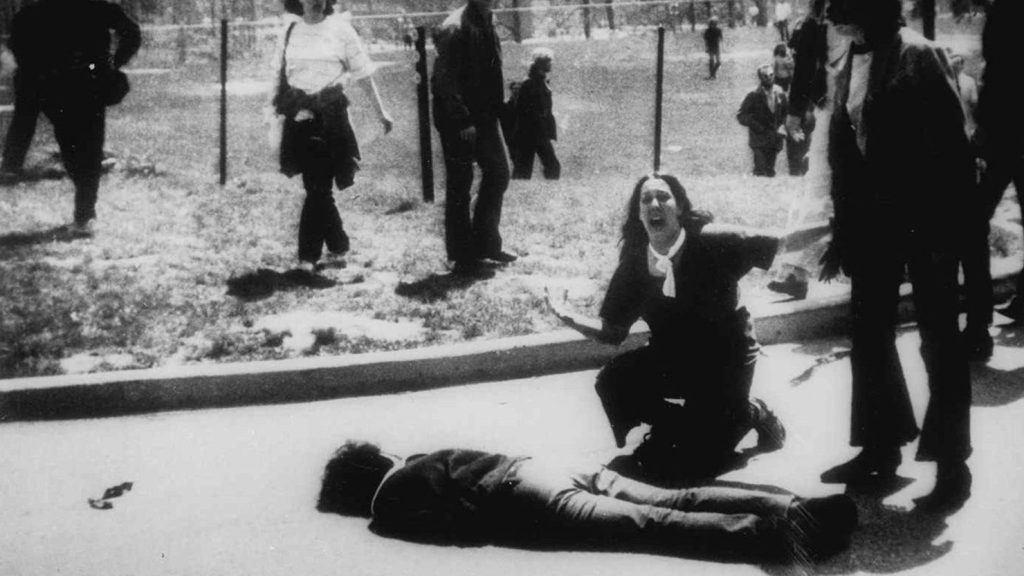
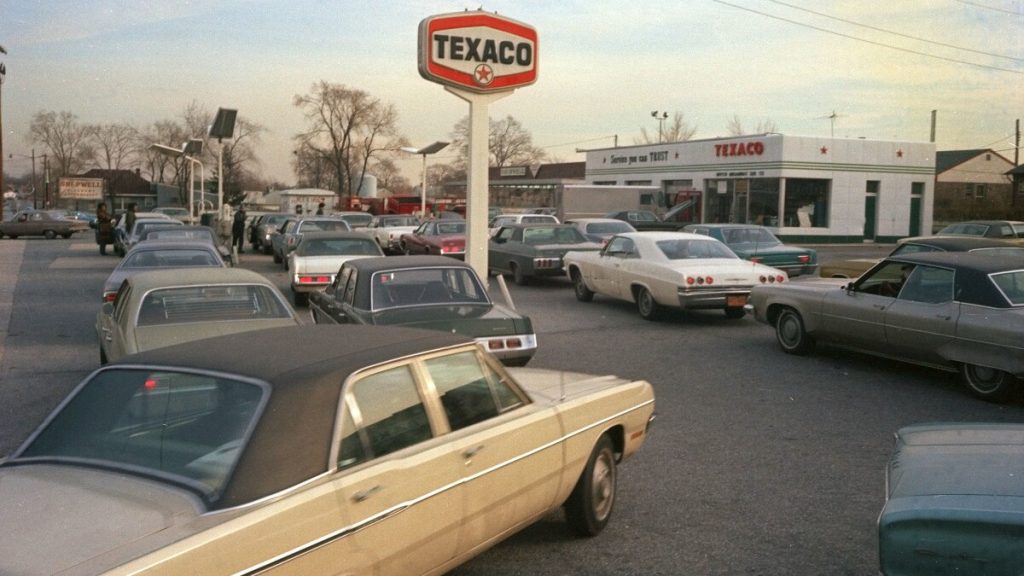
The Kent State Massacre (1970) [Left]; A gas line in 1973 [Right]
As a child, however, very little of this was apparent. My first political memory might be Richard Nixon saying he wasn’t a crook, but Kent State and Cambodia were not things I understood, even if I saw them on the news. Certainly I was conscious of the gas lines, having sat in many of them with my parents, but the fact that this was part of a larger economic blight on the country or that my mother had to stretch meals sometimes because money was tight were things of which I was blissfully unaware. In those days, parents were not your pals and kept their troubles and doubts to themselves rather than burden their children with them.
Unbothered by such things, I could appreciate the better parts of the decade, which were substantial. The greater distance between adults and children meant that they didn’t involve themselves in our affairs much unless we were in school or “in trouble,” and the current mania for scheduling every minute of every kid’s day with organized (and supervised) activities lay decades in the future. We had a lot of freedom, and it was common after one had gotten home from school to spend hours out and about without an adult in sight. Actual playdates were rare and limited to those of your friends who didn’t live in the neighborhood, so most of the time, you’d just get on your bike and ride around to see who was home. Once you found someone, you might play at his place or go down to the stationary store to buy candy and browse the comics or roam around even more, picking up other friends along the way. If it was a weekend, you might have lunch at one of these friends’ houses or on a weekday, dinner, and during summers, when the days are long, you and your buddies could easily be out the entire day and well into the evening.
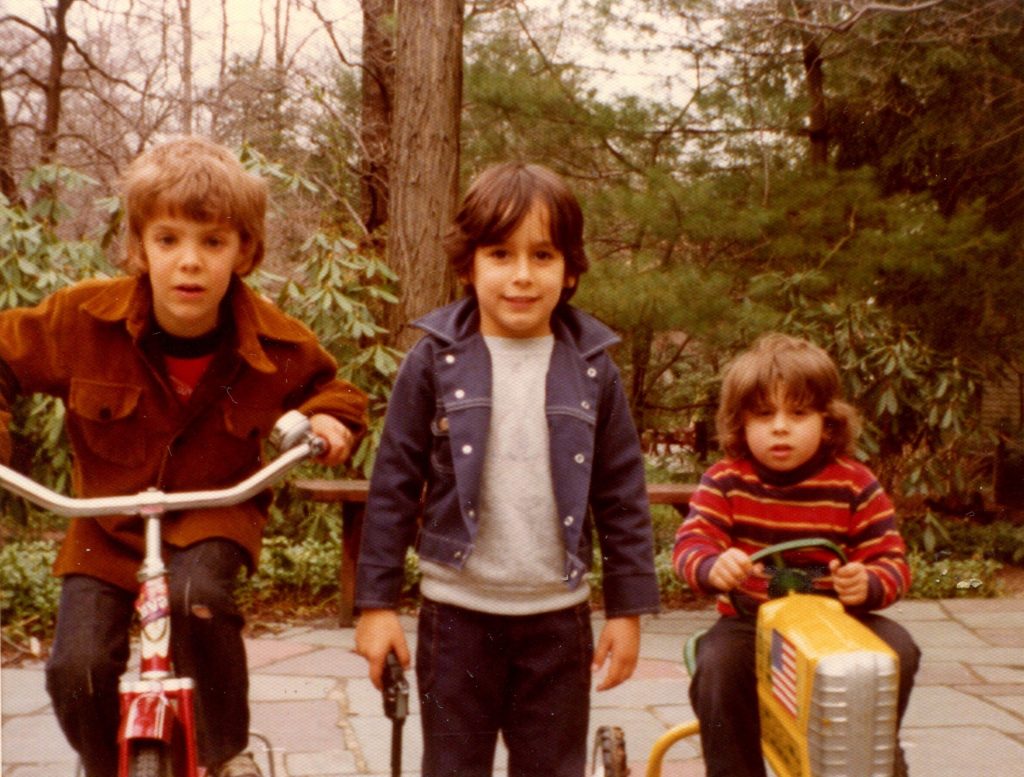
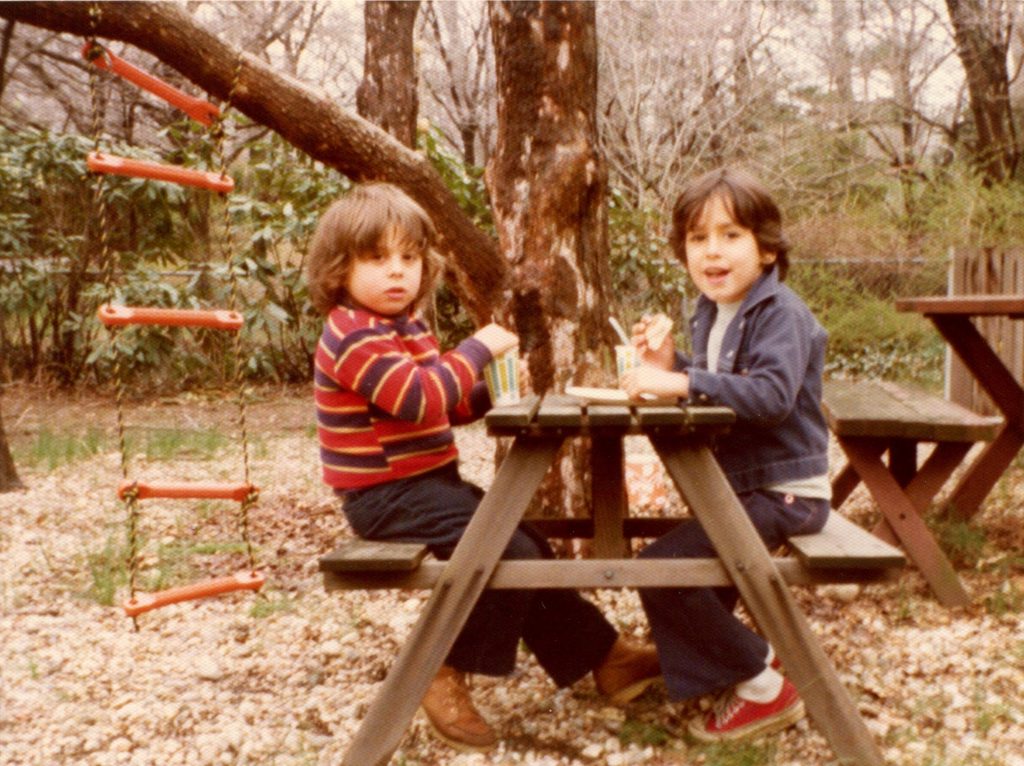
Rob the stagecoach and then break for lunch. One of an indefinite number of spontaneous play sessions in 1974.
Winters had their own charm, and if it had snowed sufficiently the night before, school would be canceled, giving us a free day. It was a time for snowmen, snowball fights, and hot chocolate and when we were a little older, shoveling driveways for pocket money. If one of our mothers was at home and willing, we might be taken ice skating or sledding at the Junior High or Public Library, both of which had long, steep hills, and if it was cold enough and the pond in our neighborhood had frozen over, we’d walk there, clear the snow, and play ice hockey.
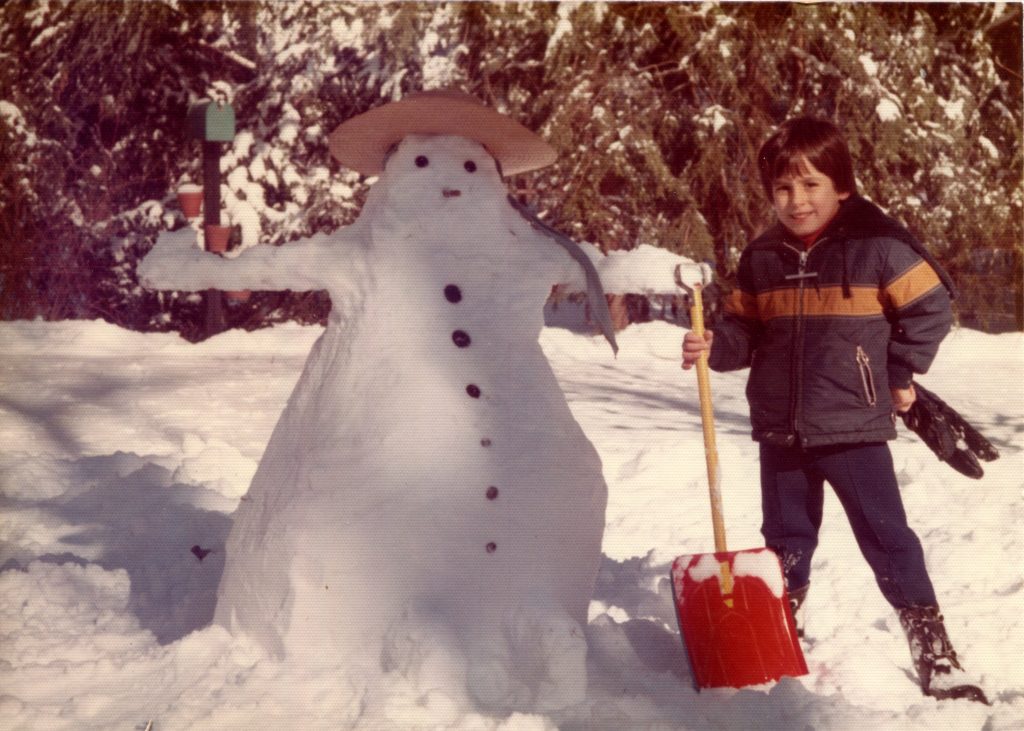
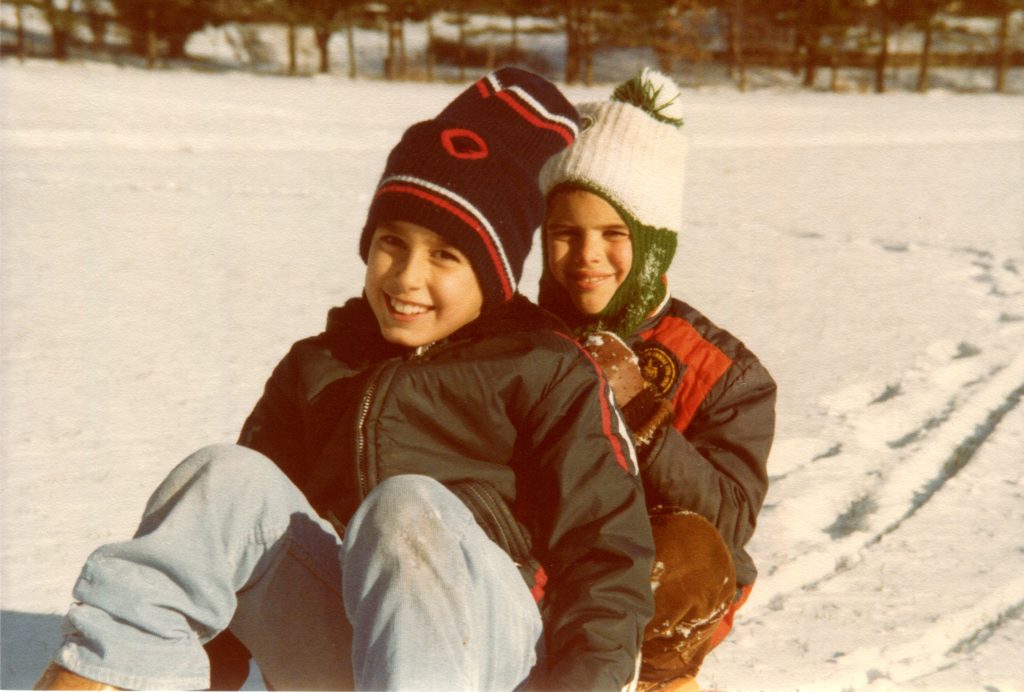
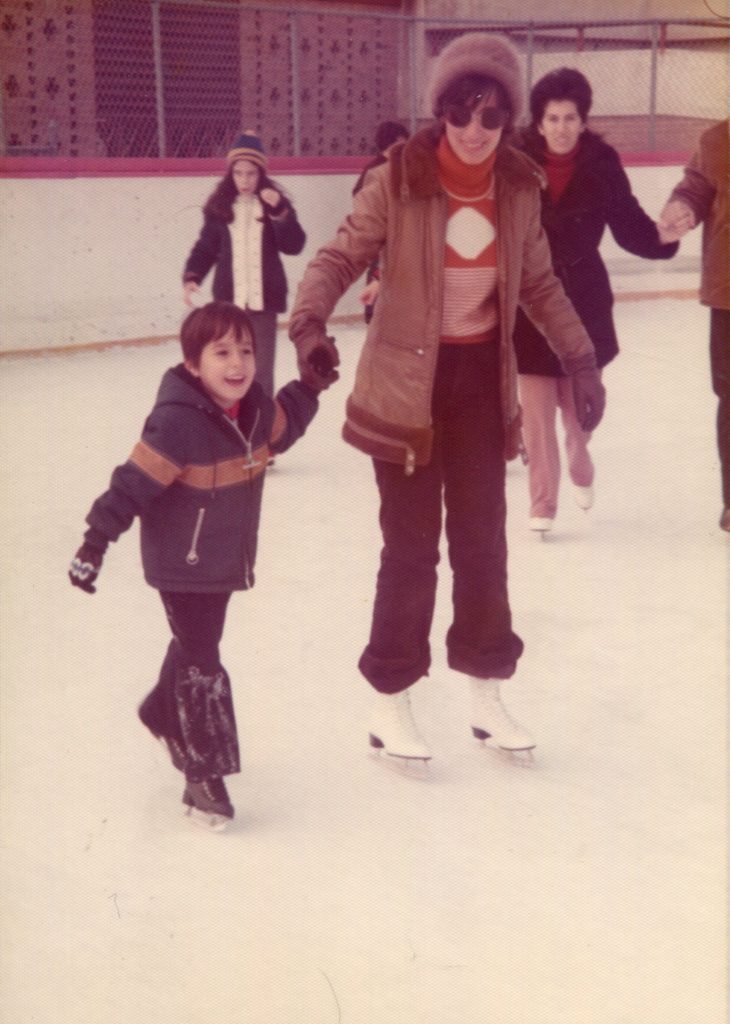
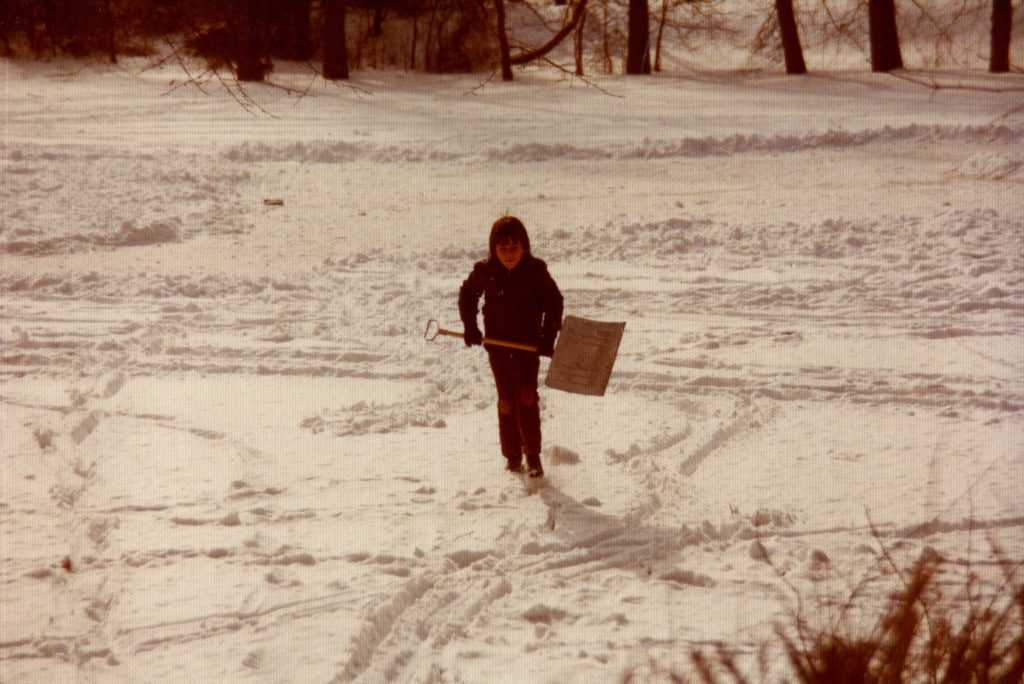
The winter’s first snowman, 1975 [Top left]; Sledding with my cousin Nicky, 1977 [Top right]; Skating with my mother, 1975 [Bottom left]; Clearing the pond for ice hockey in 1977 [Bottom right]
What home technology there was served to alleviate the most onerous and dreary of labors, but played very little role otherwise and had no impact on our socializing. Sure, we had television, but there were just a handful of channels, and children’s programming only occupied a small part of the schedule. Parents were usually quite strict about it as well, so sitting around all day long watching TV wasn’t something many of us did, unless we were home from school sick. (My TV consumption normally was limited to an hour a day, with two hours allowed on weekends.) In 1977, the Atari 2600 game console came out, but the games were few, primitive, and not the sorts of things one could marathon in the way that kids binge games today. There also were any number of handheld video games, but these too were quite simple and made a lot of noise, which meant that there weren’t many places one could play them outside of one’s home. (We didn’t have portable headphones or earbuds.) Of course, no one owned home computers or mobile phones, so socializing and interacting was always in person and out in the world. Kids today have to be reminded (or ordered) to “touch grass,” but growing up in the 1970s, that’s pretty much all we ever did.
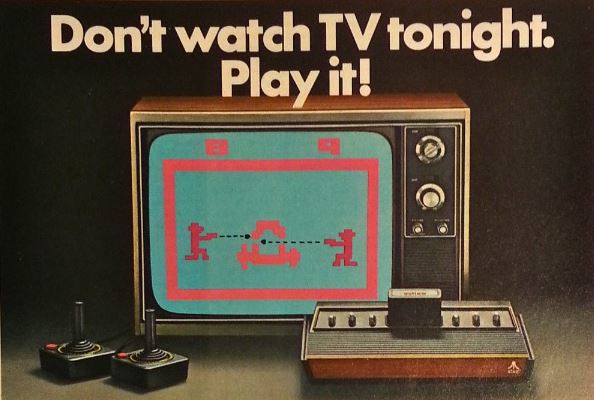
An advertisement for the Atari 2600
A good portion of our lives was spent in school, which on Long Island in the 1970s was very progressive in its orientation, as teachers tended to be either post-WW2 liberals or 1960s-era hippies. Elementary school classrooms were large open spaces with communal tables, rather than desks, and included distinct reading areas that would be furnished with couches or beanbags for everyone to sprawl on. Teachers read to us up through the fourth grade, and I was introduced to some of my favorite books this way, including: A Wrinkle in Time (1962); Harriet the Spy (1964); and From the Mixed up Files of Ms. Basil E. Frankweiler (1967).
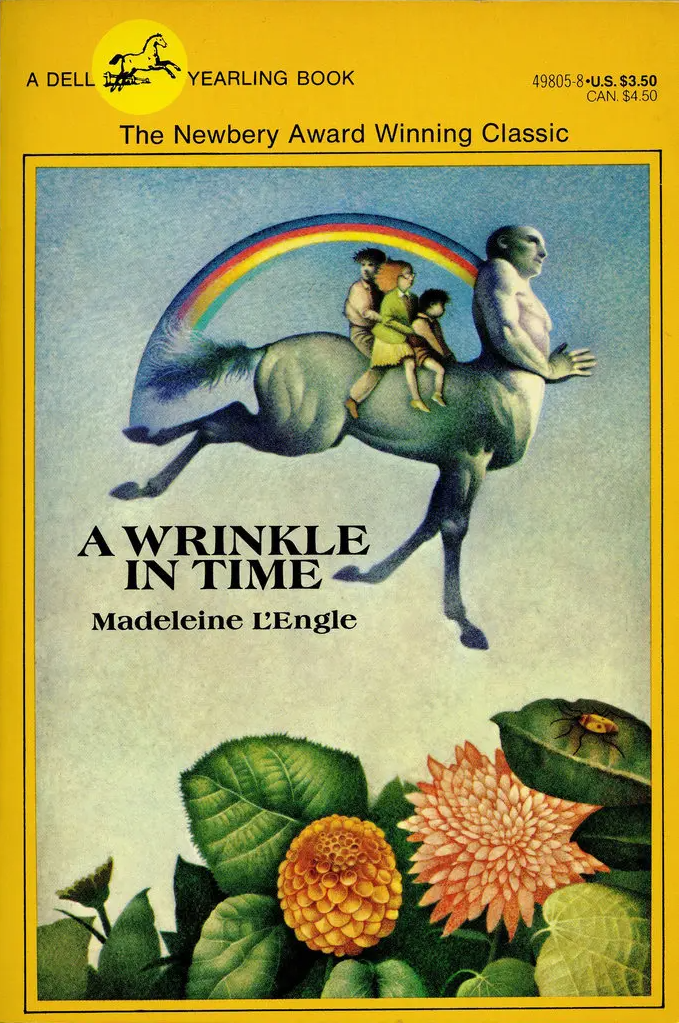
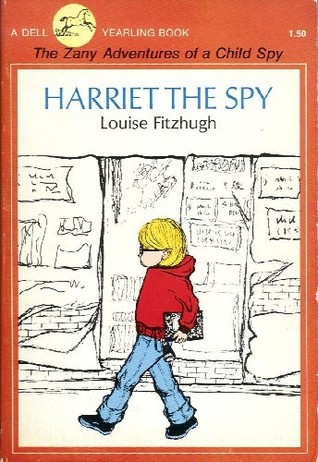
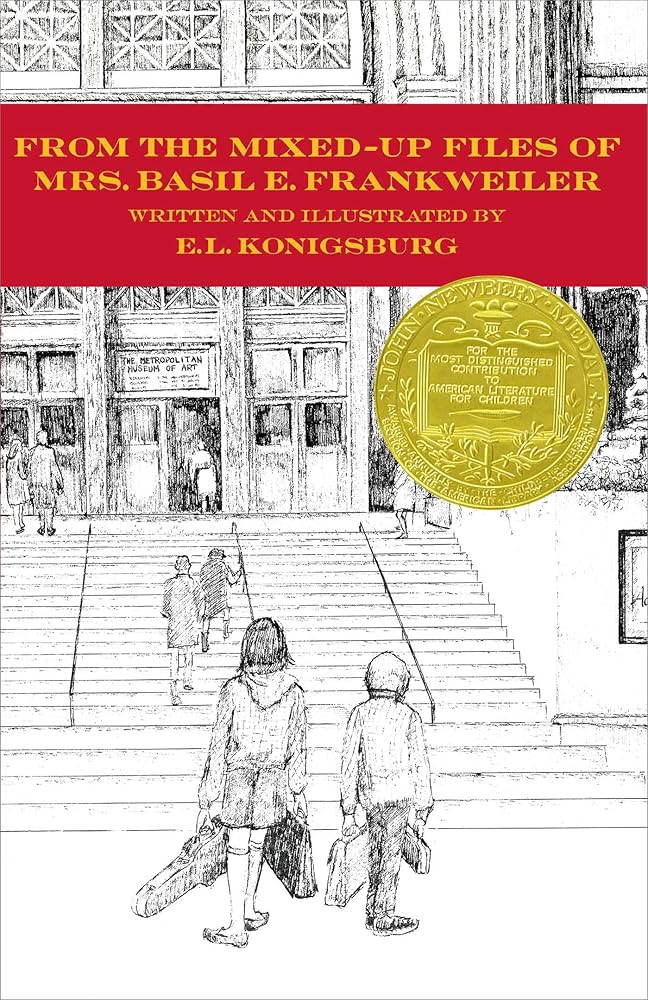
First and second grade classrooms were “inter-age,” meaning they would include children who were six and seven years old, and were managed by two teachers, rather than just one. Recesses were generous and usually involved playing Ringolevio or hanging out on the jungle gym and swings. We’d “travel” from our classrooms to specialty classes like Music or Gym, and every kid played an instrument with greater or lesser degrees of enthusiasm (mine was clarinet) and enjoyed pelting each other with rubber balls during the inevitable games of dodge ball that were a regular part of PE. Rules were lax, and the worst that “being in trouble” would get you was a trip to the Assistant Principal’s office or in the most extreme cases, a phone call to your parents. (Usually one’s mother, as suburban moms back then tended to be housewives and were at home.) That there might be surveillance cameras, metal detectors, or a permanent police presence in an elementary school was not something anyone contemplated at the time, as disciplining children was the exclusive province of school administrators and parents and did not involve law enforcement. (Our penchant for this sort of thing today clearly has nothing to do with any genuine fears, as crime rates were far higher in the 1970s than they are now.)
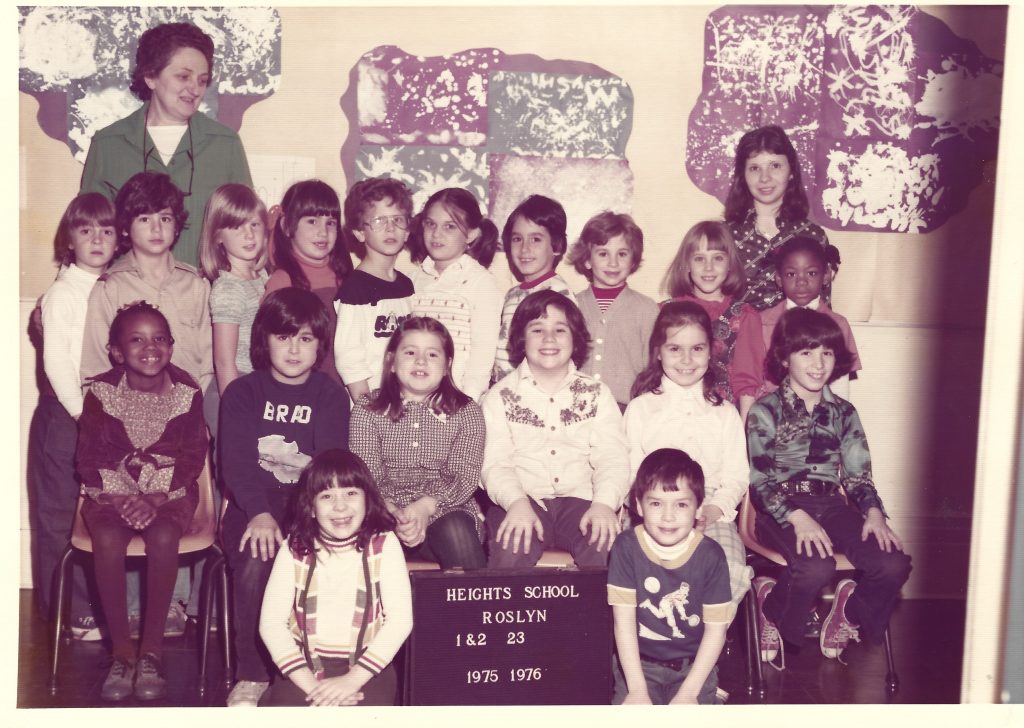
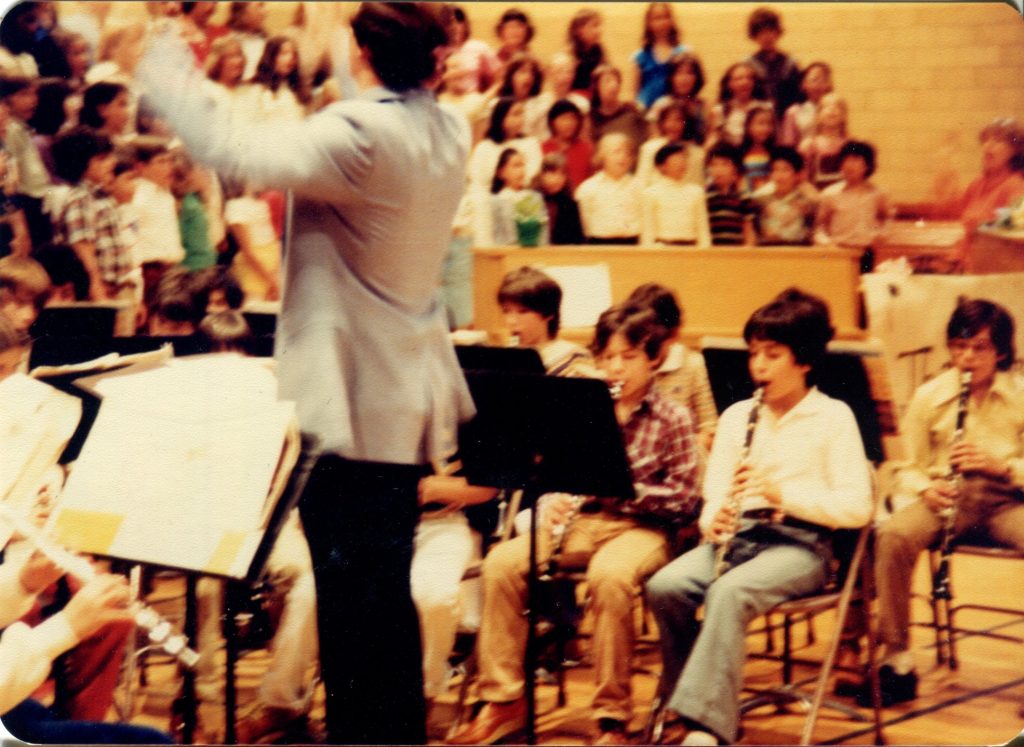
My second grade “Inter-Age” class (top row, fourth from the right) [Left]; Fifth grade, playing the clarinet with the school band (front right) [Right]
Birthdays were a big deal, but humbler affairs than what is typical for middle and upper-middle class families today. Parties were usually at the birthday kid’s house and featured unremarkable food — sandwiches, chips, and juice or if you were really lucky, hamburgers and fries from a local fast-food establishment, which in our case was Wetson’s — and homemade cake. Traditional games like sack races, duck-duck-goose, and pin-the-tail on the donkey featured prominently. One year, my mother was feeling generous (and adventurous) and held my birthday party at a bowling alley, but it wasn’t long before she and the teenager she’d hired to help lost control of us, and my cousin beat up my best friend who’d been yelling “Aim at the gutter! Aim at the gutter!” at him whenever he came up to bowl.
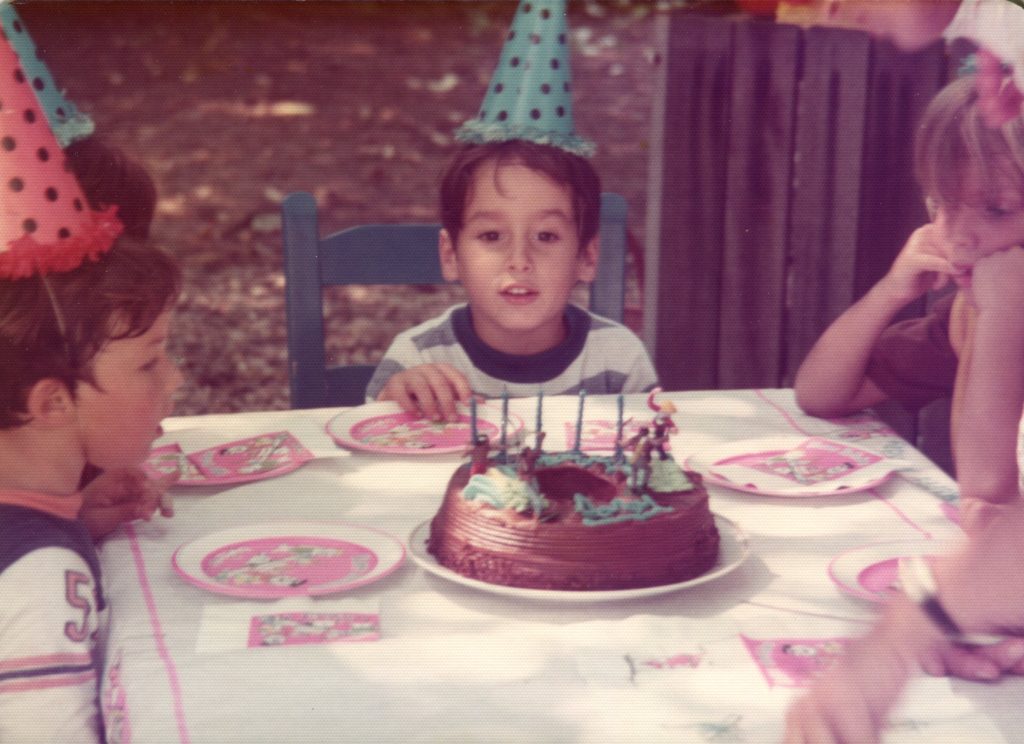
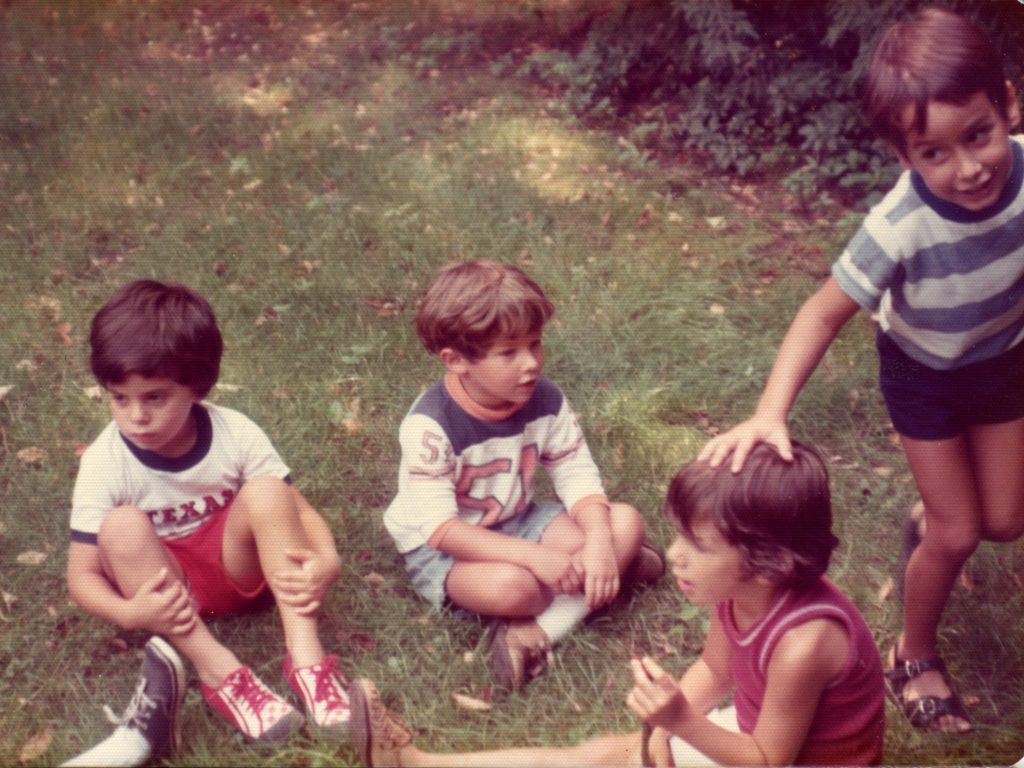
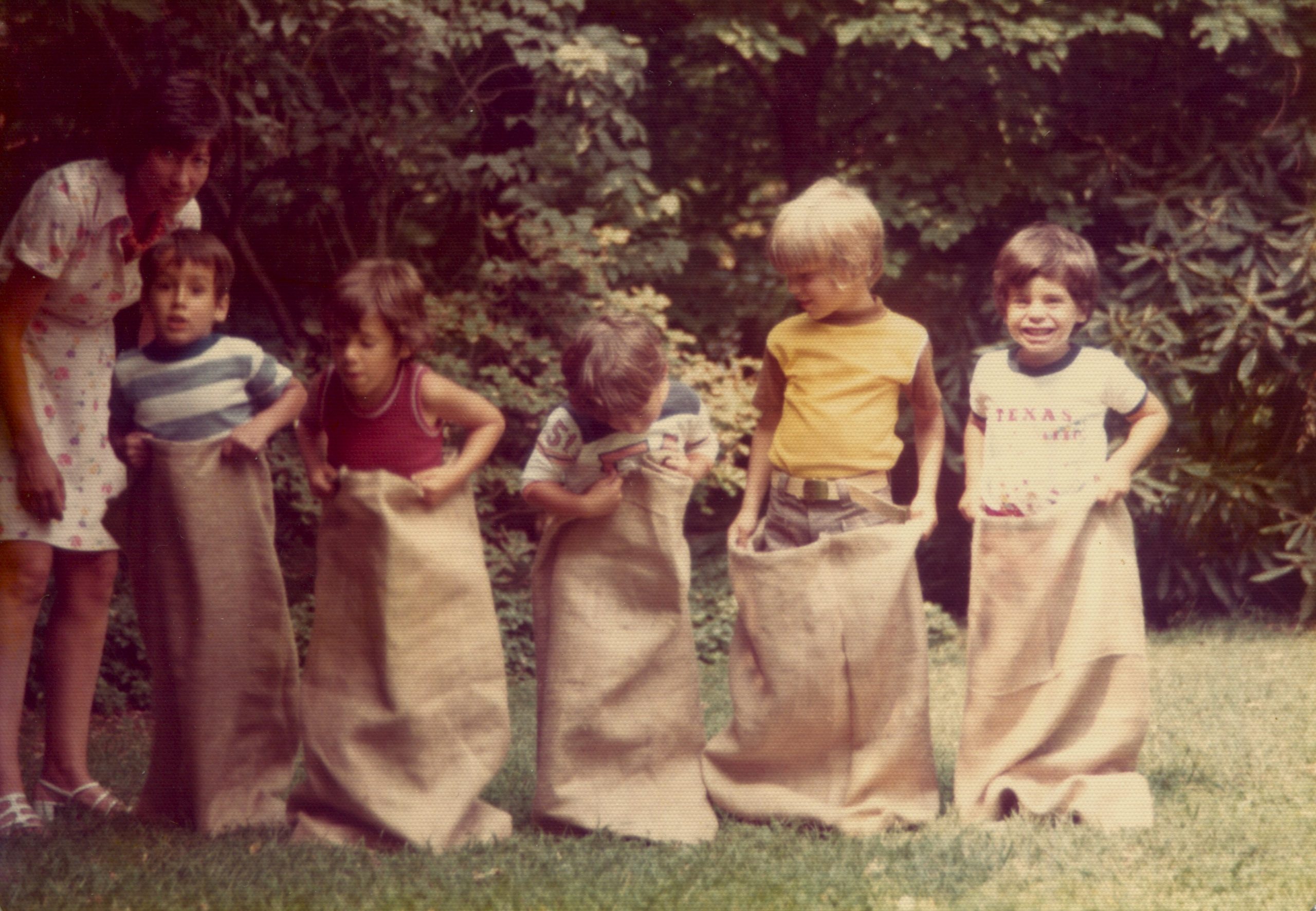
My birthday party in 1974, held in the backyard at my house.
Organized kids’ sports were gendered and mostly played by boys, with soccer, basketball, and Little League baseball being the most popular. (Girls back then tended to do ballet, gymnastics, or figure skating.) I was involved in all three, but Little League was my favorite, due in no small part to The Bad News Bears, which came out in 1976. I also played tennis and took lessons and participated in clinics at the Port Washington Tennis Academy, where John McEnroe and Vitus Gerulaitis had been trained in the cohort before mine. When I started high school and committed to playing varsity sports, I had to choose between baseball and tennis, as they occurred in the same season, and picked tennis which I still play to this day.
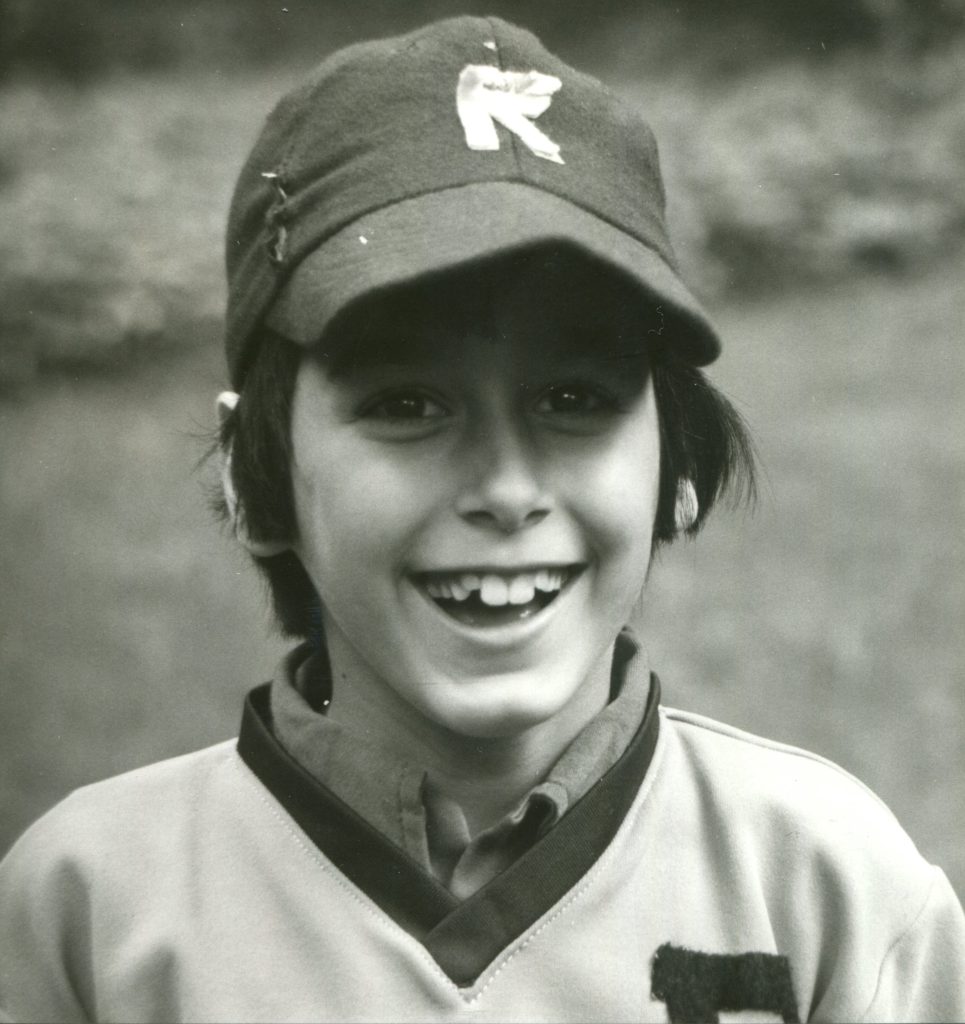
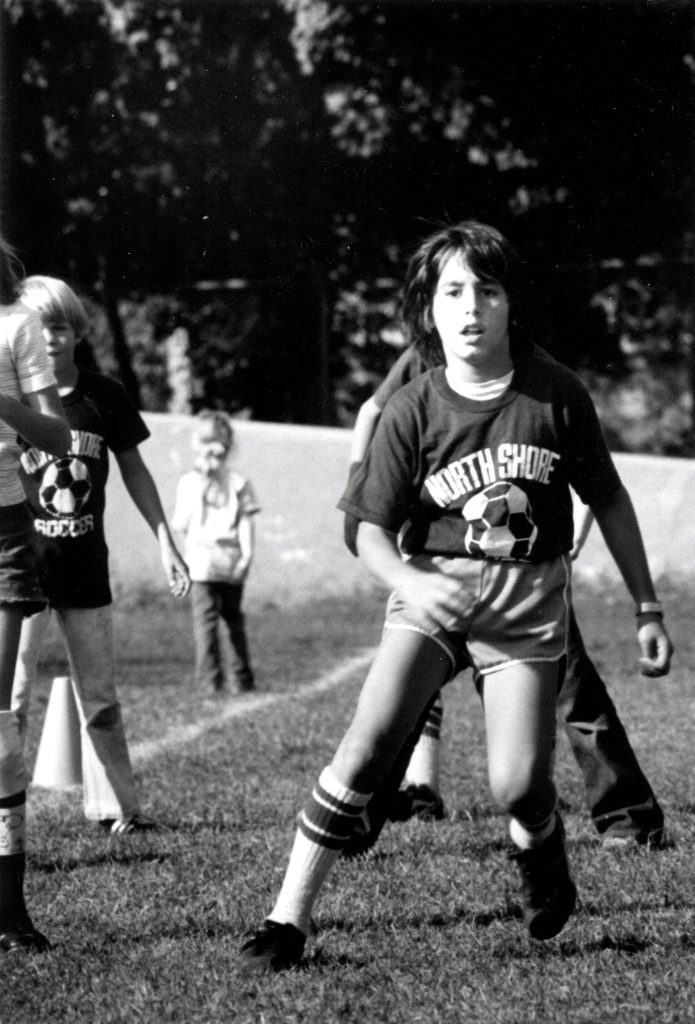
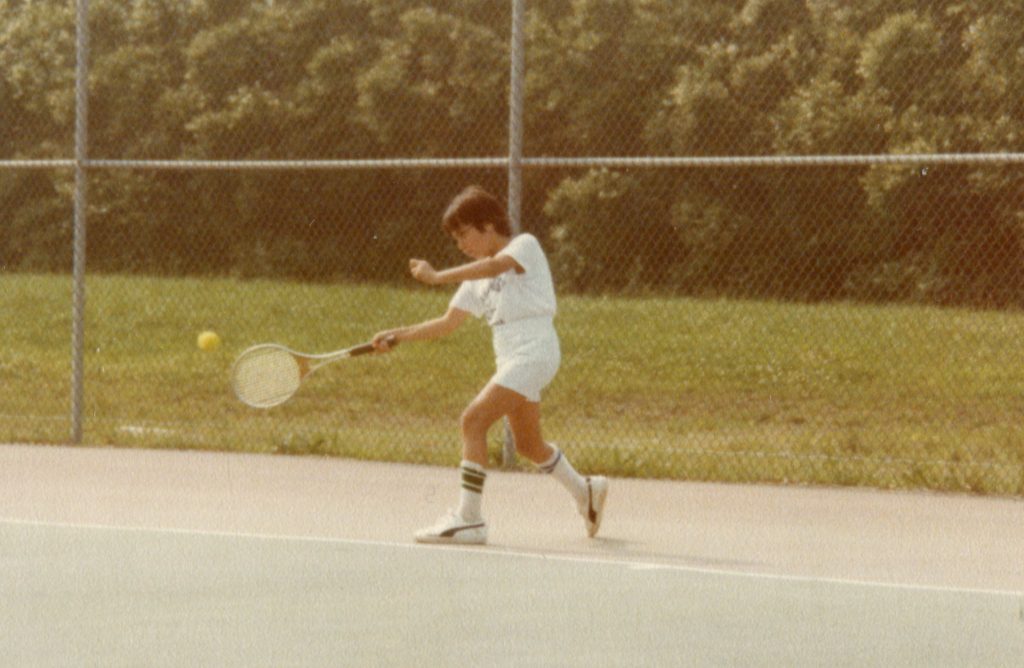
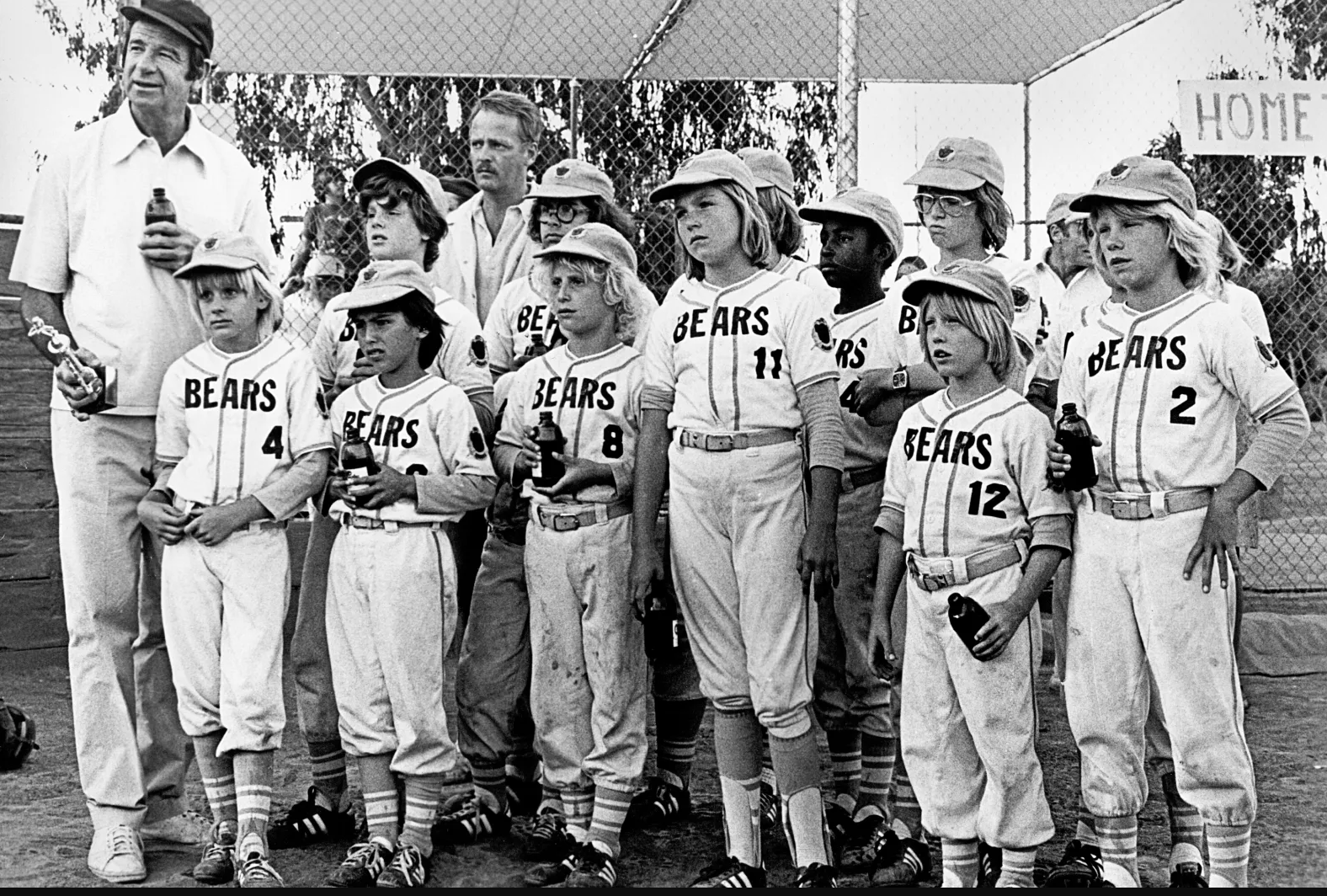
Little League (1977) [Left]; Soccer (1978) [Center]; Tennis (1978) [Right]; Promotional photo for The Bad News Bears (1976) [Bottom]
I first started Little League in the third grade, and the game was tee-ball, as no 8 year old was good enough to pitch. By a cruel twist of fate, I was assigned the catcher’s position, which in a game lacking pitching is the most useless position on the field.
My father loved the whole thing, though as a spectacle rather than out of any feelings for the game, which he didn’t understand in the slightest not having grown up in the US. He simply couldn’t get over the tiny kids decked out in baseball gear playing terribly, while their parents acted like they were in the World Series. Arguments with the umpires over calls were routine, and by the 4th grade, when pitching was in and as awful as you’d expect, the dads in the audience would shout “let him walk you!” whenever their kid came up to bat. In this regard, we were very fortunate in our coach, Mr. Bernstein, who didn’t allow our first foray into team sports to become competitive in this way. He also happened to be in the lingerie import/export business, and once my dad discovered this, he referred to him forever after as “the brassiere salesman,” which I find as funny now as I did then.
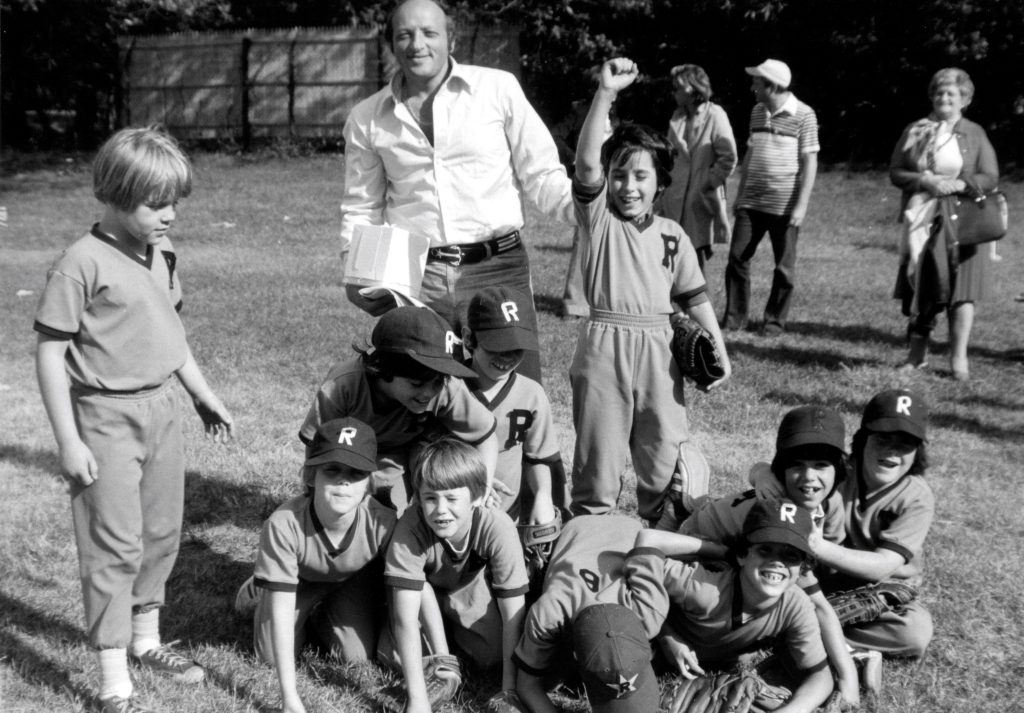
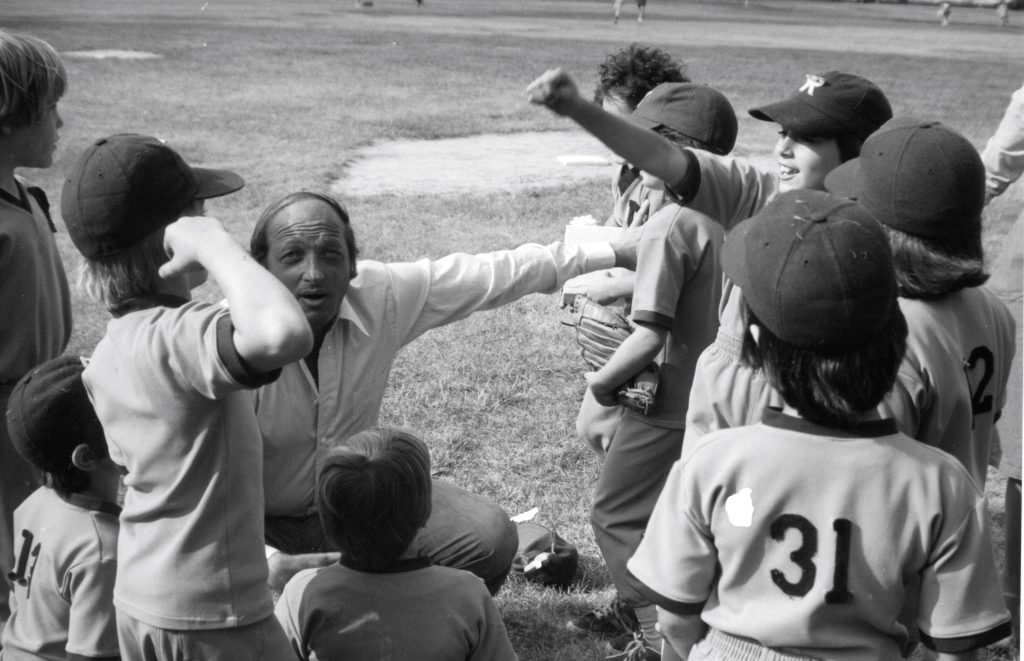
My third grade Little League team with our “brassiere salesman” coach, Mr. Bernstein (1977)
Family vacations were a regular feature of 1970s suburban life, and in our case were concentrated around several destinations and times of the year. When school ended in June, my mother and I would go to Israel, where most of our family lived (and still does), for several weeks. Labor Day weekend (right before school started) was the time we’d go to Boothbay Harbor, Maine, and Christmas and Spring Breaks were reserved for Florida — Key Biscayne at first and then, by the mid- to late-70s, Sanibel Island. These led to having “vacation friends” — i.e. kids whose families traveled to the same locations as us, year after year — and much like when I was at home, a good portion of these trips would be spent out and about with these friends and without our parents, who had better things to do than spend hours on the beach collecting tiny crabs and snails and other sea creatures or puttering around one Downeast cove after another in a canoe for half the day.
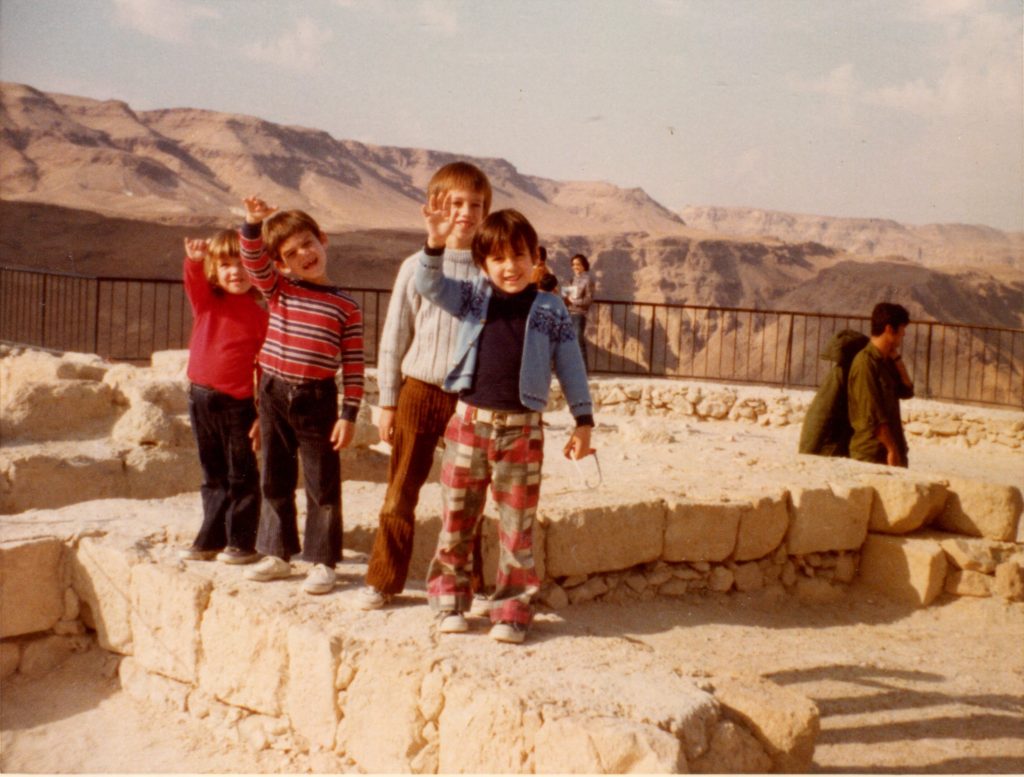
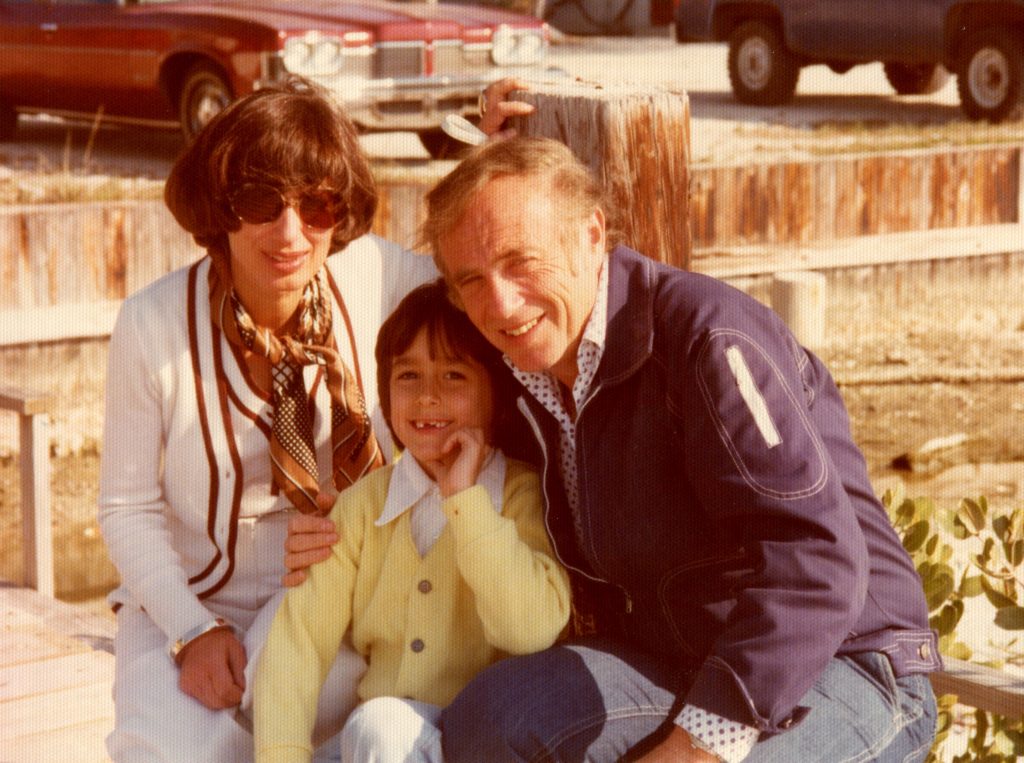
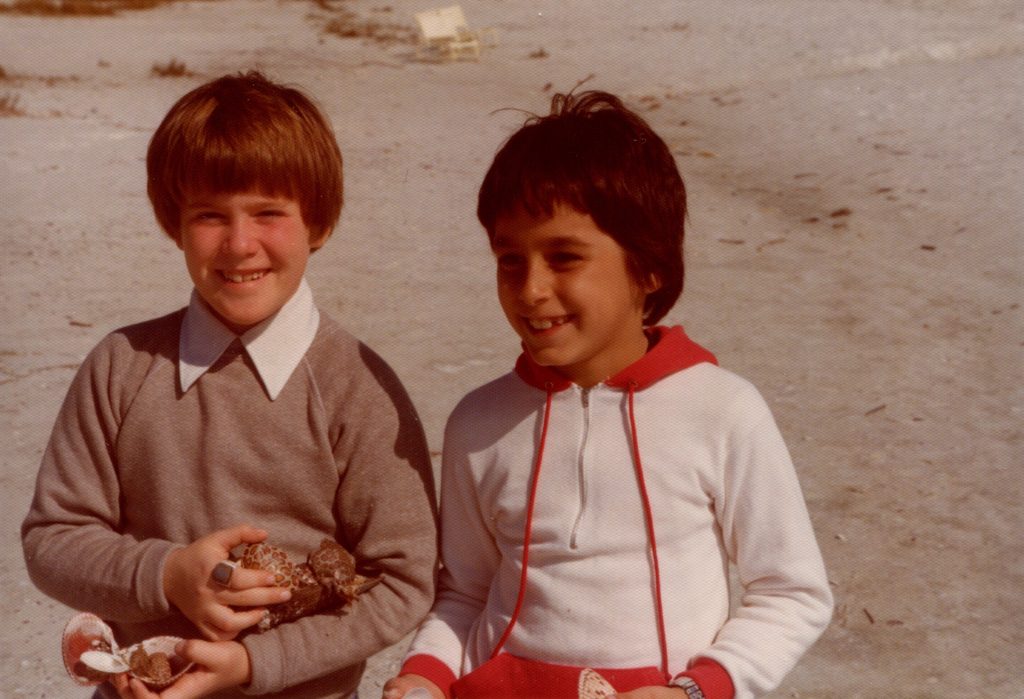
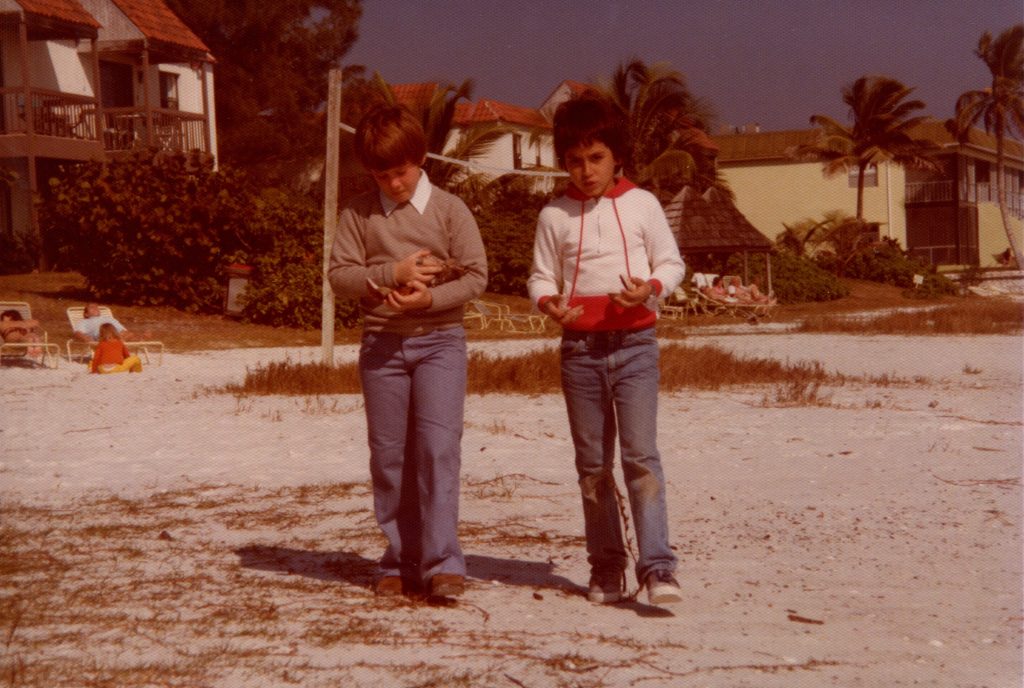
With my cousins on top of Masada in 1973 [Top Left]; In Key Biscayne with my parents in 1974 [Top Right]; With my “vacation friend,” Jim, on Sanibel Island, 1976 [Bottom]
Halloween was eagerly anticipated. When we were very young, our parents would take us around trick-or-treating, but by the first or second grade, we were allowed to go out on our own. The costumes were split pretty evenly between homemade and store bought, and I was lucky as my father, who was an artist and designer, had a real talent for making some amazing and unique outfits.
We’d usually go out in large groups, trooping from one house to another and filling up our bags with candy. Sometimes, we’d cut through yards and climb over fences, and on one occasion, we were crossing Mike Yudell’s backyard, when I fell into a large hole in the ground. I was dressed as a ghost that year, and the next day at school, I happened to run into Mike who’d not been allowed to trick-or-treat, as he’d been grounded for some offence or other. He told me that it had been a boring night, except for one moment when he was looking out the window and saw a ghost appear in his backyard, only to promptly disappear.
As we entered our pre-teen years, Halloween became less about obtaining as much candy as one could in a single evening and more about toilet-papering trees, egging houses and mailboxes, and making a general nuisance of ourselves. This was even more fun than trick-or-treating, as it added an element of danger to the overall sense of anticipation.
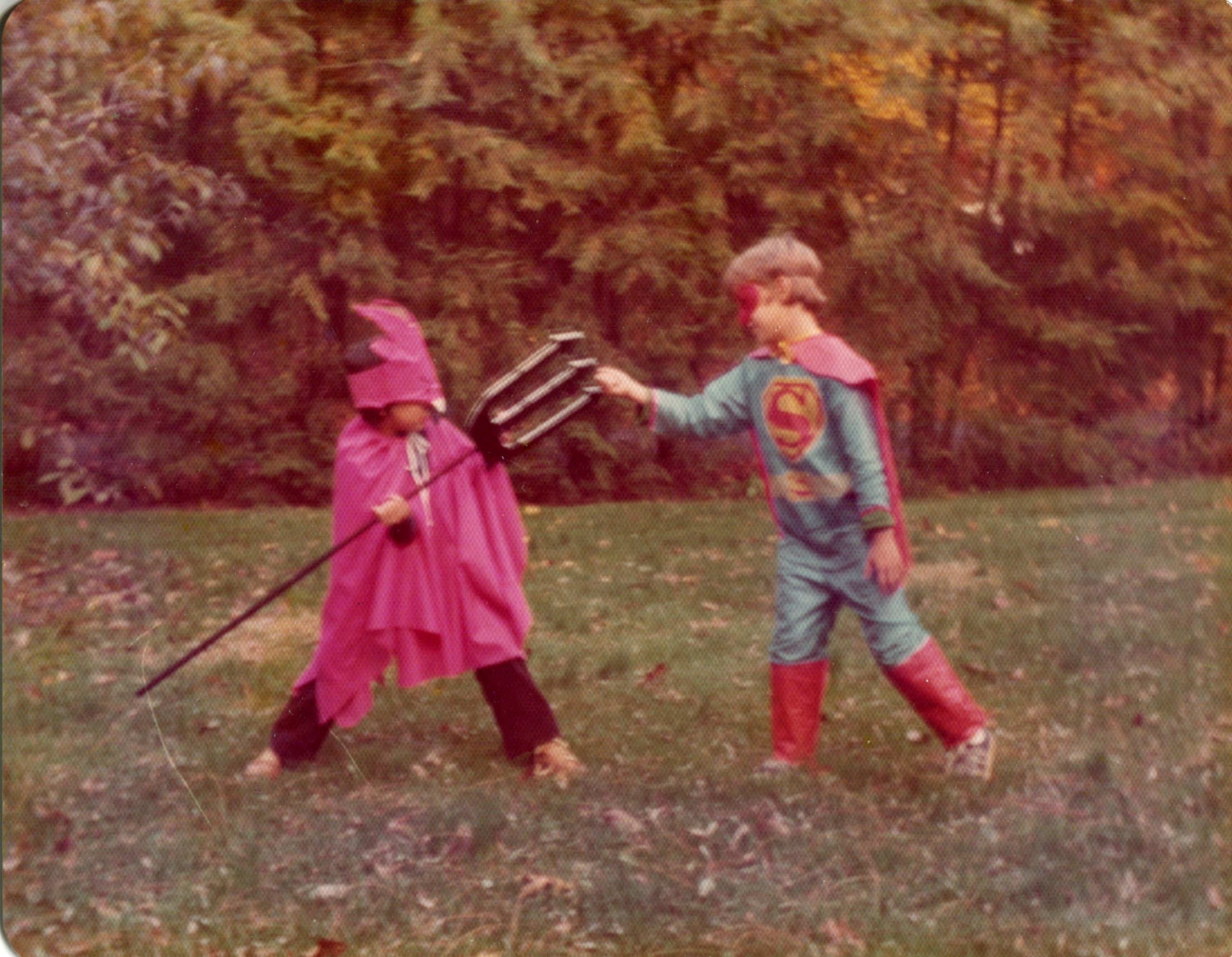
The Devil (me) versus Superman (my next door neighbor), Halloween 1974.
I was almost eight years old when the American Bicentennial Hit, and I remember it well. It was all over children’s television and especially, Sesame Street, The Electric Company, and Schoolhouse Rock. The latter devoted an entire season to American history and government for the Bicentennial, with the “I’m Just a Bill” episode being perhaps the most well-remembered. There were Bicentennial quarters and postage stamps that I became obsessed with collecting, special celebrations and fireworks on July 4th, and even my favorite band, KISS, expressed the Bicentennial spirit in a series of posters you could buy or find as fold-outs in rock magazines like Hit Parader and Creem. (My father took me to see KISS that year for my first ever rock concert.)
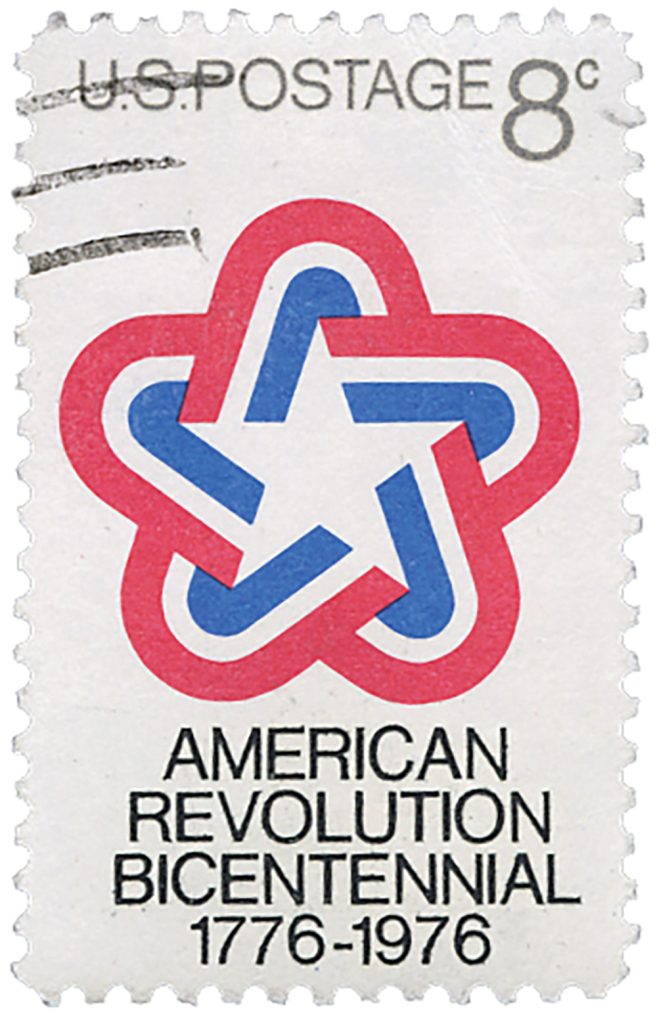
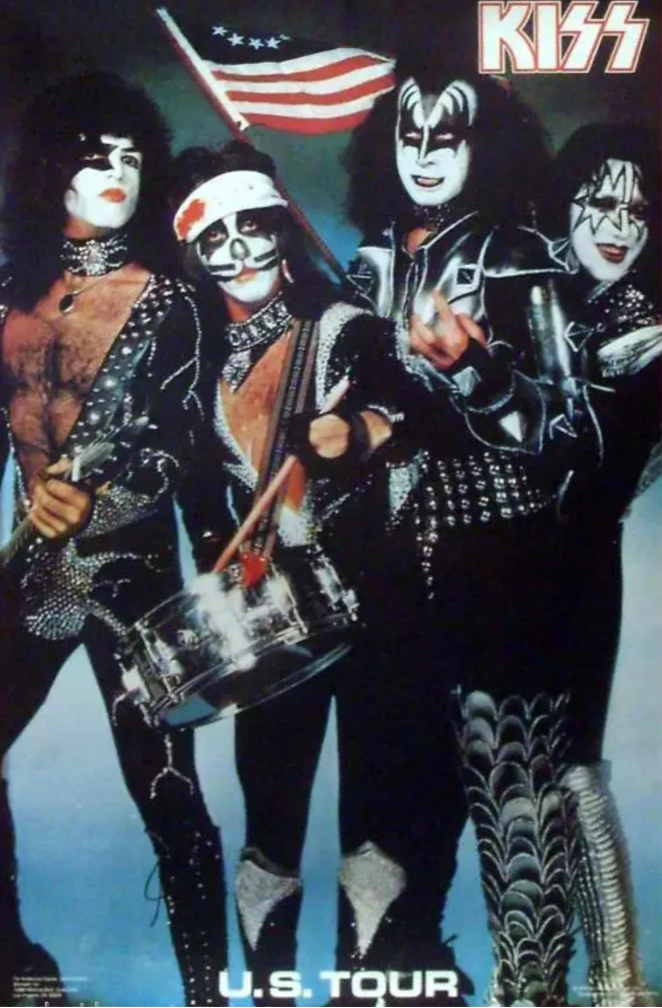
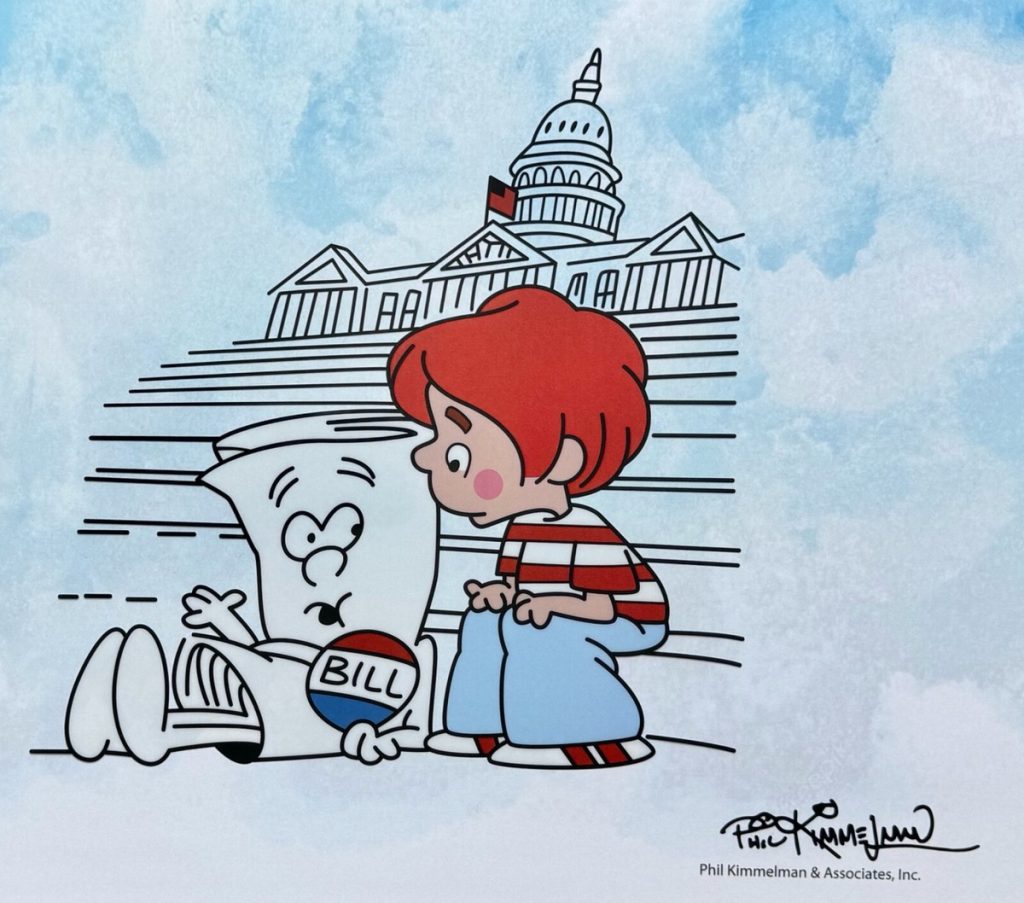
American Bicentennial postage stamp [Left]; the KISS Bicentennial poster [Center] Schoolhouse Rock’s “I’m just a Bill” [Right]
Childhood, it seems, is either magical or terrible, and mine undoubtedly was the former. I was fortunate to spend it in an intact family, in an era and a place where children were allowed to grow and develop and interact with one another with little interference from adults, but with the reassuring understanding that they always were in the background and in charge. Our concerns were appropriately limited to our own small worlds and didn’t include the economic, environmental, and geopolitical worries that cause so much anxiety among kids today. The grownups took care of that stuff, and we were left to our schooling and to our play, which were as natural and free as was possible in a modern society. The technology we had was sufficient to insure that we didn’t spend large portions of each day engaged in menial tasks, as the children of previous eras had, but not so pervasive and intrusive as to distort and disfigure our development and socialization, as it is and does now.
A 70s childhood. It was simply the best, and there are times when I wish dearly that I could go back.
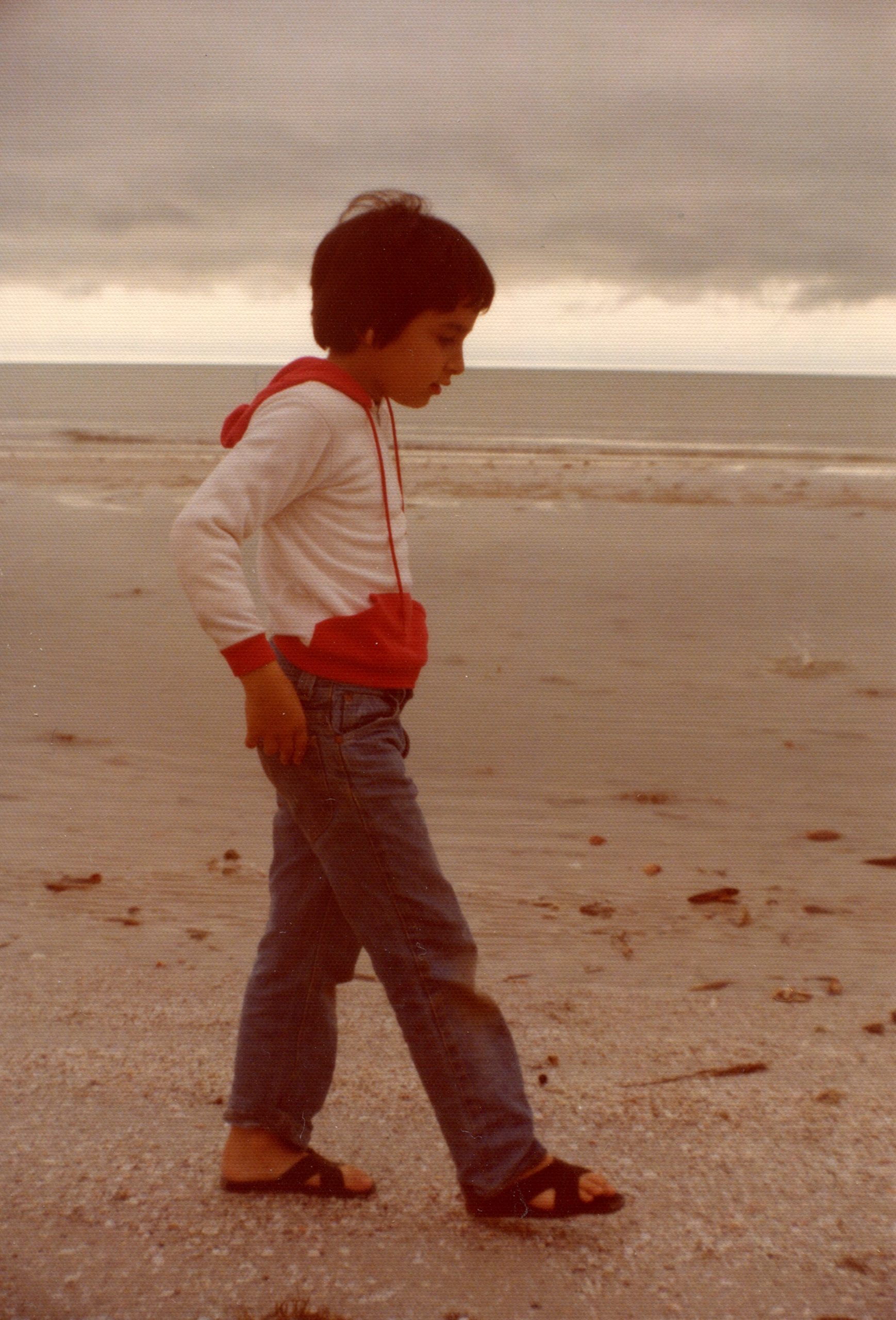
A contemplative moment on Sanibel Island in 1976.