[1] Propositions have no inherent efficacy, even if they are true. [2] Thought experiments demonstrate much less than you think they do. [3] Proving that an argument is formally valid is not particularly impressive or persuasive. [4] It matters whether you actually...

Acropolis
“What, me worry?” AI and the University
This essay consists of remarks delivered at Florida Gulf Coast University, on September 10, 2026. university was once an institution whose purpose was the education and acculturation of elites, which is why classics dominated the curriculum. This conception of the...
How to Make Your Work Last (at least) 200 Years Through the Magic of A.I.
For normal people, immortality is one of those inchoate, unearnest desires born of negative feelings -- loss, fear, regret, and the like -- that is readily discarded in our more sober moments. Putting aside those who believe that we survive death as souls, spirits,...
Course Notes: George Orwell, “Politics and the English Language” (1946)
https://www.orwellfoundation.com/the-orwell-foundation/orwell/essays-and-other-works/politics-and-the-english-language/ Orwell’s influential essay, originally published in 1946, when considered alongside his “The Prevention of Literature” (1946) and the Appendix to...
Philosophy GPT
That commercial AI bots like ChatGPT are the scourge of higher education is a well-rehearsed subject. If cheating was rampant before this technology came on the scene -- in the years prior to my retirement in 2023, I already was confronted with significant numbers of...
The Liberal Consensus and the Orthodox Mind
A rather bizarre dialogue over at Blogging Heads in 2018 induced me to pull together a number of thoughts regarding the liberal consensus. They remain apt today, so I thought I’d republish the piece at Cathoderayzone. Aryeh Cohen-Wade and Edmund Waldstein, a...
Course Notes: Clive Bell and Formalism
A Pattern We try to define ‘art’ in a way that can accommodate all of the various art forms that exist in our day, only to discover not long after that art history has moved in yet another direction rendering the definition obsolete. The emergence of “pure” or...
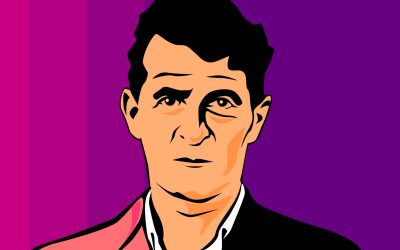
Notes on The Investigations, Part One
I've been doing a reading of Wittgenstein's Philosophical Investigations, highlighting certain sections and adding notes. This is the first installment. The selections from the book are preceded by the relevant paragraph numbers. My remarks are indicated by square...
Course Notes – Paul Churchland, “Eliminative Materialism and the Propositional Attitudes” (1981)
In the philosophy of mind, aside perhaps from sensations and their perplexing “qualia,” intentional states (the so-called “propositional attitudes”) have proven materialism’s biggest headache. Its greatest hope, Functionalism (and particularly, the computational...
Course Notes: Leo Tolstoy, What is Art?
I began my career at Missouri State (then, Southwest Missouri State) in the Fall of 1999, and one of the things I was hired to teach was an upper-division course in Aesthetics, which included topics belonging to the philosophy of art, proper (like whether ‘art’ can be...
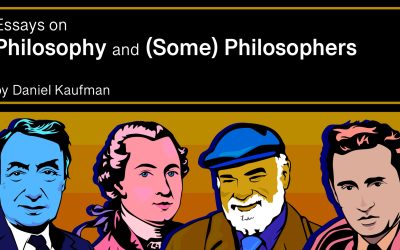
Essays on Philosophy and (Some) Philosophers
[1] Defining ‘Philosophy’ [2] Philosophical Questions and their Answers [3] Is X Really___? [4] Philosophical Expertise [5] The Discourse Delusion [6] Philosophical Rhetoric [7] Some Questions about Philosophical Arguments [8] Philosophy as Diplomacy [9] The...
Course Notes: Jerry Fodor’s “Special Sciences or the Disunity of Science as a Working Hypothesis”
http://fitelson.org/woodward/fodor.pdf I spent the bulk of my academic career at Missouri State University, and one of the things I was hired to teach was the philosophy of mind, which I did every other year. (It would alternate with philosophy of literature in the...
Sellars and the Disunity of Human Understanding
The rise of modern physics and biology yielded a picture of the world that had many philosophers thinking: “Everything is made of the same stuff and operates under the same principles.” Where human beings once had been thought to occupy a separate ontological...
Gilbert Ryle’s Crucial Insight
When I was still teaching, I used to spend several class sessions in my Philosophy of Psychology course on Gilbert Ryle’s The Concept of Mind (1949). It could be rough going at times. Some students found the idea of a disposition obscure, while others found it hard to...
Course Notes: Susan Sontag, “In Plato’s Cave,” from On Photography (1977)
https://homepages.hass.rpi.edu/ruiz/MediaStudioImagingFall07/READINGSmsi/Sontag%20In%20Plato's%20Cave.pdf When I was still teaching, a third of my upper-division course in Aesthetics was devoted to art criticism, but given the impossibility of doing any justice to the...
Course Notes: Thomas Hofweber’s, “A Puzzle About Ontology” (2005)
According to Quine, ontological commitment is a matter of theory selection and quantification. We identify our best scientific theories of the world, look to what they quantify over, and these are the things that we take to exist. Quine rejects wholeheartedly the idea...
Is X Really___?
Of all the virtues of H.A. Prichard’s “Does Moral Philosophy Rest on a Mistake?” (1912) -- and there are many -- its greatest is in exposing the mischief the term ‘really’ has played in philosophy, as in: “Is X really a duty?” ‘Does Y really exist?” “Do we really know...
Some Questions About Philosophical Arguments (and “Thought Experiments”)
**Throughout, I intend 'material' to contrast with 'conceptual'.** [1] What does it mean to “demonstrate” something, in the philosophical sense of the term? Is it just to show that something is true? [2] Does successful demonstration require securing agreement?...
Moral Reflections Inspired by (some of) the Ten Commandments
Reflection on the explicitly moral commandments in the Decalogue raises a number of interesting considerations in the area of Ethics. I am thinking, specifically, of the following: (translation is the Jewish Publication Society’s Tanakh (1985) 6. You shall not murder....
Course Notes: Judith Jarvis Thomson’s “A Defense of Abortion.”
https://spot.colorado.edu/~heathwoo/Phil160,Fall02/thomson.htm It is rare that one will find near universal agreement as to the most important paper written on a particular subject, but that is exactly what we find with Judith Jarvis Thomson’s 1971 paper, “A Defense...
Liberalism and Kitsch
On a number of occasions, I have defended what I’ve taken to calling “procedural liberalism” on the grounds that in large pluralistic societies: (a) one cannot expect one’s fellow citizens to share a common, substantive conception of the good; and (b) one cannot...
Arthur Danto’s Significance for Metaphysics
When it comes to philosophies of art – theories about what art is or what defines ‘art’ – I have distinguished between “traditional” theories and what I call the “New Wave.” The former, which includes Representationalism (art is “mimesis”), Expressivism (art is the...
Course Notes: Plato, “Meno”
The Meno is a text I added to my Introduction to Philosophy course not long before my retirement, and it was something I hadn’t read in probably twenty-five years. Coming at it relatively fresh, then, I was struck by: (a) just how many topics it covers (as well as how...
On Art, ‘Art’, and Why Danto Was Wrong About Both
Arthur Danto thought that artworks are constituted by their interpretations; that what makes this artwork this one and not that one is that this one means one thing and that one means something else. The art-critical project, on this view, is crucial to the...
Philosophy as Diplomacy
That philosophy is a primarily argumentative business is, I trust, evident enough that I don’t need to expand on it much. I’m not denying that there are philosophical satires or poems or essays that may stray from this otherwise common mode. I do work in that vein...
Course Notes: Three Lectures on Knowledge
In 2019, I developed an entirely new version of Introduction to Philosophy. (I retired in 2023, in the wake of the Covid pandemic and the death of my father.) Profound changes in the student population over the preceding years, as well as a shocking increase in the...
Moral Philosophy and Moral Life
An argument against theism is that the world looks exactly as you’d expect it to if there is no God and not at all like it would if there is one, and I want to say the same thing about morality: Moral life looks nothing like you’d expect it to if traditional moral...
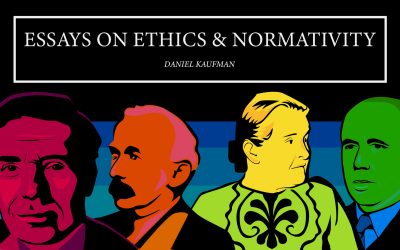
Essays on Ethics and Normativity
The following collection of twenty-three essays summarizes my views on ethics and normativity, after a thirty year career in philosophy and in the wake of my recent retirement from teaching at Missouri State University. [1] Some Questions about Obligation [2] On a...
Reasons, Causes and Social Science
This is a much-discussed topic in philosophy, and a number of classics inform my views here, including: Gilbert Ryle, The Concept of Mind (1949); Ludwig Wittgenstein, Philosophical Investigations (1953); Peter Winch, The Idea of a Social Science and its Relation to...
Normativity / Objectivity/ Obligation / Value
My early work in aesthetics and the philosophy of art was devoted to the question of artistic value and whether there was a way one could construe it as objective. The dominant view in aesthetics, greatly influenced by the work of Hume and Kant, has been that artistic...
The Dirty Little Game of Academic Philosophy
Years ago, over at the Daily Nous, a much read insider philosophy blog, David Velleman, who enjoys digs in the world’s #1 ranked philosophy department, posted his version of a Modest Proposal: Philosophy journals should no longer publish papers written by graduate...
Remarks on Truth, Ontology, and “Physicalism”
‘Truth’ and ‘is true’ The most popular view on truth is some variation on the correspondence theory, according to which saying that a statement is true is saying that it “corresponds” to “reality” or “the facts” or “states of affairs” or some such thing. The trouble...
On Defining ‘Philosophy’
Whenever I am asked to give a definitive characterization of philosophy, my reply typically takes the form of listing a number of representative philosophical questions, like this: What are good reasons for believing something? How do sounds, marks, gestures, and the...